More on Cleopatra’s Needle in Central Park

Cleopatra’s Needle in Central Park

Abbie Swanson of WNYC has a good update on the merits of the criticism leveled by Zahi Hawass of the treatment of ‘Cleopatra’s Needle’ in Central Park. I have a short appearance in the story, but the real interesting reporting comes from her interview of Will Raynolds, who wrote his Masters Thesis on the monument:

Raynolds said that in its first four years in New York, large sheaths of granite came loose from the surface of Cleopatra’s Needle. An additional 780 pounds of stone were lost when a waterproofing company tried to stop the decay with a creosote and paraffin treatment in 1884. But the last major study of the monument, conducted by the Metropolitan Museum in 1983, found that the rate of decay had stabilized. The Parks Department says now there is no significant ongoing erosion on the obelisk.

“And yet, you know there are still signs that there’s some gradual erosion occurring on the surface,” Raynolds said, adding that you can see patches of decay where the obelisk’s native pink color appears on the surface of the stone.

So the monument is eroding, but the very eroded sections were done initially when the monument was first in New York. Mark Durney did some searching of the New York Times archives and found something similar:

[I]in May 1914, the Central Park commissioner with the help of Columbia University’s James Kemp and the Metropolitan Museum of Art’s William Kuckro began extensive restorative work on the obelisk during which they removed a paraffin layer, which was added soon after the obelisk’s erection, and they added a new waterproof coating. At this time the obelisk’s condition was described as “scaling on all sides,” and, “in some sections the shaft was blank for several feet.” The NYTimes’ description from 1914 appears to appropriately describe the damage, or deterioration, similar to that which is depicted in photographs on Hawass’s blog.

So it certainly would not hurt to continue to study the conditions in New York, and the steps which can be taken to minimize damage, but my initial guess was correct. Zahi Hawass was making unfounded allegations to continue to press for the repatriation of objects. He may have a good claim for a number of objects, but that argument loses its steam when you make the same urgent calls for every object which originated in Egypt, irrespective of the circumstances surrounding its removal. Many of these individual objects carry unique circumstances, and all sides in these contentious arguments would be well-served to avoid premature or overly critical concerns.

WNYC Audio:

Questions or Comments? Email me at derek.fincham@gmail.com

Superindictments and their Consequences

Yesterday there was a series of over 120 arrests of alleged mafia members. Though it is not quite on the same scale, it bears at least a few similarities to the indictments handed down in the Southwest as a part of  operation ‘cerberus’, or even the searches of California Museums in early 2007. Christopher Beam writes that these large investigations are ‘superindictments’:

Why one huge arrest, rather than a bunch of smaller ones? “It’s a statement,” says Jim Wedick, a former FBI agent. “They wanted to say, ‘You know what? We are back in town.’ ” Since 2001, the FBI has shifted its resources away from traditional crime-fighting toward counterterrorism. Thursday’s bust is a message from the Department of Justice to organized crime: We haven’t forgotten about you.

A message certainly was sent yesterday. By using this large-scale investigation Beam writes that you can encourage individuals to cooperate, informants are almost assured if you arrest a large enough group, and a powerful message is sent. Yet the events in the wake of the Cerberus investigation are sobering. Do law enforcement officials need to weigh the severity of their actions? Or do individuals who break the law earn the hardships which can sometimes emerge.

Cerberus was the frightening three-headed dog that guarded the underworld. The beast prevented souls from crossing into or out of the Hades’ dominion. A sad irony then that three suicides emerged from the investigation. The undercover informant who set much of the investigation into motion, and two of the individuals indicted. Antiquities looters have almost certainly changed their behavior. Whether the investigation drove them further underground or caused them to cease the looting remains to be seen. One hopes they have ceased looting of sites, but until the demand for black market antiquities is erased, there will sadly be people willing to risk arrest. Investigators worked very hard to make this case, and agents work tirelessly to police these sites, yet until the demand is eliminated, will these investigations continue?

  1. Christopher Beam, FBI Mafia Arrests: The rise of the superindictment. Slate (2011), http://www.slate.com/id/2281894/?from=rss (last visited Jan 21, 2011).
Questions or Comments? Email me at derek.fincham@gmail.com

The Cultural Heritage & the Arts Review

The American Society of International Law Cultural Heritage and the Arts Interest Group has published its second issue. Topics include the Machu Picchu artifacts which appear to be returning to Yale; the Met’s repatriation of objects from King Tut’s tomb, California’s new Art Law, and more. You can find subscription information here.

Questions or Comments? Email me at derek.fincham@gmail.com

Footnotes

  • Boy George (yes that one) agreed to return a looted icon to Cyprus after the church community saw the icon in a TV interview. 
  • Switzerland’s Federal Culture Office is calling for a simplified and more accessible provenance research process, particularly with respect to Nazi-era spoliation.
  • “Portrait of a Young Woman” perhaps by Peter Paul Rubens
  • Three works—a Samuel Peploe, Jean-Baptiste-Camille Corot, and Federico Barocci—were missing after an audit of the Glasgow Museums collection. They have been recovered after a curator saw the Corot listed in a catalog.
  • The United Kingdom’s Culture Minister Ed Vaizey announced yesterday that this work has been denied export temporarily, in the hopes a domestic buyer will purchase the work.
  • Rutgers University’s Zimmerli Art Museum has voluntarily agreed to return a work confiscated by the Nazi’s to the grandson of the original owner.
  • Plans to draw tourists to the Roman city of Jerash in Jordan.
  • Tip of the iceberg: the British Museum kept 99% of its collection in storage during 2009-10 (via).
  • The import restrictions on certain objects from Italy have been announced. Let the rational appraisal begin.

Questions or Comments? Email me at derek.fincham@gmail.com

What’s the Difference Between a Pawnshop and antique shop?

The pawnshop is most likely subject to more regulation. Book and antique shops are criticizing a potential lapse in Utah law which would require all buyers of rare books and antiques to be fingerprinted, and a catalog entered of all the objects. At least part of the renewed calls for more regulation stem from a murder in November. Sherry Black, a prominent member of the community—mother-in-law to the owner of the Utah Jazz. She was a rare book dealer who bought $20,000 worth of books stolen from the Church of the Latter Day saints. The seller may have been a gang member who beat and stabbed the woman to death.

Given that kind of violence, a sensible increase in regulation seems warranted. It seems as if a running catalog of objects sold would be very helpful. Fingerprinting may be a step too far, but a simple photocopy of a drivers license perhaps would not seem out of the qustion, particularly if an objects value exceeds a sensible amount, $5,000 perhaps.

I was struck then by Ethan Trex’s discussion of pawnshops:

Meanwhile, European pawnbroking began to flourish during the Middle Ages. The Norman Conquest introduced the practice to England, and the Lombardy region of northern Italy was another hotbed of pawnbroking. In fact, pawnbroking became so strongly identified with Lombardy throughout Europe that the term “Lombard” gradually became synonymous with “pawn shop” and “Lombard banking” was a widespread term for pawnbroking.

Anyone who turns to a pawnbroker to scare up some quick cash is in good historical company. Pope Leo X, a notoriously free spender, once had to pawn his own palace furniture and silver to cover his luxurious lifestyle and patronage of the arts. (It’s no surprise, then, that Leo X was at the helm of the Church when it gave the practice of pawnbroking the official thumbs-up in 1515.) In 1338 King Edward III hocked his jewels to raise funds for the English military at the dawn of what would become the Hundred Years’ War.

  1. Derek P. Jensen, Utah’s used-book, antique shops fear crackdown, The Salt Lake Tribune, January 13, 2011, http://www.sltrib.com/sltrib/home/51045760-76/says-law-antique-lawmakers.html.csp (last visited Jan 18, 2011).
Questions or Comments? Email me at derek.fincham@gmail.com

Looted Statute (maybe Caligula) Seized Near Rome

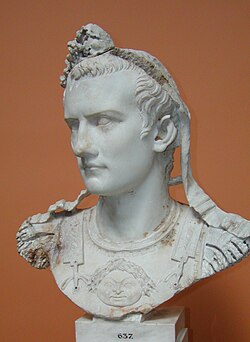
A Bust of Caligula at the Ny Carlsberg Glyptotek

Italian police have arrested a tombarolo with an 8-foot ancient statue not far from Rome. The statue may be worth €1 million. They believe the statue may be of Caligula, and may even have been looted from Caligula’s tomb, which has not been discovered. We surely won’t know if this tomb or the site was the actual tomb, but if looting is destroying the archaeological record, we are losing information.

Might the record have given us information on Caligula, who may have received a bad rap from the sources which have survived antiquity? Contemporaries describe the emperor as insane, saying he appointed a horse as consul, slept with his sisters, and killed often. But these might have been claims made by his political enemies in the senate and elsewhere—perhaps not too different from today’s politics. After all, how could the son of Germanicus (my favorite Roman) have been such a bad guy. Caligula only ruled from AD 37-41, before he was assassinated.

I wonder where this statue was going to be sold? The United States, the middle-East, Asia? Excavations will start to reveal the archaeology of the site where the tomb raider unearthed the massive statue.

  1. Tom Kington, Caligula’s tomb found after police arrest man trying to smuggle statue, The Guardian, January 17, 2011, http://www.guardian.co.uk/world/2011/jan/17/caligula-tomb-found-police-statue (last visited Jan 18, 2011).
Questions or Comments? Email me at derek.fincham@gmail.com

An Interview with Paolo Giorgio Ferri

Fabio Isman had a terrific interview with Italian Prosecutor Paolo Giorgio Ferri which I’ve just now gotten around to reading. Ferri was the prosecutor during Marion True’s trial in Italy. The discussion ranged from the problem of prosecuting antiquities looting to the international laws which apply, and the damage done by metal detecting. Here is an excerpt:

GDA: What was your first investigation into illegal excavations?

PGF: It was in 1994, with the then sergeant of the carabinieri department for cultural heritage, Vito Barra, now in charge of security at the Vatican Museums. We believed that a statue stolen at Villa Torlonia had been put up for auction at Sotheby’s. So we travelled to London [but made no progress]. Five months later, Sotheby’s sent me the names of two companies: Edition Services and Xoilan Trading. Edition Services is a company owned by Giacomo Medici, until now the only important “art robber” to have been convicted in Italy [Medici is currently appealing]. Xoilan Trading is one of the various names of [companies connected to] the art dealer Robin Symes. But at the time we didn’t know this. Faced with two Panamanian companies, Barra was on the verge of giving up. “No one’s going to tell us anything,” he said. Shortly afterwards, I met Daniela Rizzo, an archaeologist of the monuments office for southern Etruria. Together with Maurizio Pellegrini, from the museum of Villa Giulia, she was to play a crucial role in my work. 

  1. Fabio Isman, “Clandestine excavation is a crime that is hard to prove”, The Art Newspaper, January, 2011, http://www.theartnewspaper.com/articles/%E2%80%9CClandestine+excavation+is+a+crime+that+is+hard+to+prove%E2%80%9D/22164 (last visited Jan 18, 2011).
Questions or Comments? Email me at derek.fincham@gmail.com

Friday Diversion: Eating in Amelia

I’m receiving a handful of questions each day from folks interested in attending the MA program in Amelia this summer. One of the most common kinds of questions seeks information about the day-to-day during those three months of the program. For those folks, I strongly recommend a look at Catherine Sezgin’s recent series of posts on Amelia. Catherine graduated with the MA Certificate in 2009, and has gone on to do some super writing and research and in her spare time maintains ARCA’s Blog. Have a look:

  1. Profile of Amelia
  2. Punto di Vino
  3. La Misticanza
  4. Porcelli’s beats out Napoli Pizza

We have a really strong pool of applicants so far, but there is still space for more, so I do encourage you to submit an application, the deadline is January 21st.

Questions or Comments? Email me at derek.fincham@gmail.com

Eating in Amelia

One of my favorite things to think about. I’m receiving a handful of questions each day for folks interested in attending the MA program in Amelia this summer. One of the most common questions ask about the day-to-day during those three months. We have a really strong pool of applicants so far, but there is still space for more, so I do encourage you to submit an application, the deadline is January 21st. In the meantime on a Friday afternoon, I recommend Catherine Sezgin’s series of posts on Amelia. Catherine graduated with the MA Certificate in 2009, and has gone on to do some super writing and research and in her spare time maintains ARCA’s Blog. Have a look

  1. Profile of Amelia
  2. Punto di Vino
  3. La Misticanza

Wild Story of A Forger who Donates his Forgeries

 Randy Kennedy has a super article (following an earlier report in the Art Newspaper) discussing a man named Mark Landis who forges works of art and donates the forgeries to art museums all over America. He may have been doing this for as many as twenty years.

His real name is Mark A. Landis, and he is a lifelong painter and former gallery owner. But when he paid a visit to the Paul and Lulu Hilliard University Art Museum in Lafayette, La., last September, he seemed more like a character sprung from a Southern Gothic novel.

He arrived in a big red Cadillac and introduced himself as Father Arthur Scott. Mark Tullos Jr., the museum’s director, remembers that he was dressed “in black slacks, a black jacket, a black shirt with the clerical collar and he was wearing a Jesuit pin on his lapel.” Partly because he was a man of the cloth and partly because he was bearing a generous gift — a small painting by the American Impressionist Charles Courtney Curran, which he said he wanted to donate in memory of his mother, a Lafayette native — it was difficult not to take him at his word, Mr. Tullos said.

That is a pretty remarkable thing to do, even in the art trade. The lesson is clear though, we can certainly blame the forger/donor, but provenance and the history of an object must be checked, even when an object is donated. 

  1. Randy Kennedy, Elusive Forger, Giving but Never Stealing, N.Y. Times (Jan. 12, 2011).
  2. Helen Stoilas, “Jesuit priest” donates fraudulent works, The Art Newspaper (Nov. 2010).
Questions or Comments? Email me at derek.fincham@gmail.com