The Race to Reform in the American Museum Community

The DMA returned ownership of this red-figure krater (4th century BC)—
Italian officials allowed the piece to remain at the museum on loan

Max Anderson is leading the way towards reform in the American Museum Community. The Director of the Dallas Museum of Art has an OpEd in yesterday’s Dallas Morning News responding to recent criticism in the New York Times of the decision by museums to return looted works of art. Here’s the introduction to the piece:

Protecting the world’s cultural heritage is essential to all of us. Like the natural environment, the material record of the past is irreplaceable and easily damaged. Whether you live in a country rich in archaeological finds, or a country with curiosity to learn about the past, every citizen wants to protect archaeological sites from intentional or accidental destruction. And every scholar and museum professional wants to share our most complete understanding of the objects and beliefs that people treasured in the past. The illicit trade of these objects is responsible for one of the largest international black markets, and the destruction of archaeological sites is often the result. It is not museum purchases that have been fueling the damage in recent years: As a result of strict, self-imposed guidelines, those acquisitions have slowed to a trickle over the last decade. However, private purchases are not subject to such guidelines and take place invisibly. Additionally, the construction of public works, from roads to buildings, causes undocumented harm to historic sites every day around the globe, not to mention accidental discoveries on private property, quickly hidden or destroyed. Natural disasters and armed conflict also take their toll on the world’s cultural heritage.

With this and other statements, Anderson is distinguishing himself and his institution from the old days of optical due diligence and the acquire-at-all-costs attitude of so many other American museums. Those policies have slowly been reformed, bu many still cling to that old idea, that these museums should acquire beautiful objects, despite the looting and theft which brought them to a shady international market. I hope that more and more museums look for more creative and sustainable means of acquisitions in the way Anderson has done. Nations of origin and foreign museums really do need each other. Now the mark of a great museum is not how many ancient objects it can acquire— in the past Anderson has called this lust for acquisition the desire to make museums ‘treasure houses’. Instead cooperators with nations like Italy will find collaborative relationships and long-term loans in exchange for cooperation in returning looted objects. Rather than hoard the ill-gotten acquisitions of the past, I think museums will find themselves working quickly to get at the head of the collaborative line with these nations. Anderson’s opinion piece, and the recent nudge towards reform in the AAMD guidelines are the most recent indication of what one hopes will be a positive shift.

  1. Maxwell Anderson, Giving back art — how museums see it, Dallas News, Feb. 8, 2013.
Questions or Comments? Email me at derek.fincham@gmail.com

Call for Presenters, ARCA’s 5th Annual Conference, June 21-23, Amelia Italy

Association for Research into Crimes against Art 
5th Annual Conference, June 22-23, 2013, Amelia Italy
Call for Presenters

Aims of the Conference

The conference brings together experts and practitioners to examine crimes against art in all its forms—theft, looting, destruction, and fraud. Presenters are welcome from any allied fields which touch on art crime, including: law, criminology, law enforcement, security, art history, archaeology, conservation, journalism, and any other relevant field. Presenters are grouped into thematic panels of 3-4 speakers. Each speaker will be strictly limited to a 20 minute period, with ample time for questions at the conclusion of each panel, to allow for a lively and engaging conference.

The conference is held in the beautiful town of Amelia, in the heart of Umbria, Italy. The conference will include a cocktail reception on Friday, June 21 at an elegant palazzo, as well as an awards dinner on Saturday evening, to honor recipients of ARCA’s annual awards for scholarship, lifetime service, art security and recovery, and policing.

To submit a proposal or to attend:

Please contact me at Derek.fincham@artcrimeresearch.org

Presentation submissions should include a short title which summarizes the main idea of your presentation, and a longer but still concise summary of your proposed presentation topic.

There is a small fee to offset the cost of the cocktail and conference dinner, but there is no registration fee for the conference. Please contact Dr. Fincham if you plan on attending, as we can put you in touch with Monica Di Stefano, ARCA’s accommodations director in Amelia who can direct you to suitable accommodation and assist with travel arrangements. We regret that, as a small non-profit, we have very limited travel funds available to assist presenters or attendees.

Questions or Comments? Email me at derek.fincham@gmail.com

Reactions to Hugh Eakin’s Anti-repatriation NYT Op-Ed

A recent looter’s pit in Cerveteri

I’m not sure who is editing the New York Times Sunday Review, but this Sunday’s piece by Hugh Eakin contained a stunning array of factual inaccuracies. To pick a passage:

Since 2006, more than 100 statues, bronzes, vases, mosaics and other works have left public collections in the United States. Among them was the Euphronios krater, depicting a scene from the “Iliad,” which awed visitors to the Met for decades, and a rare limestone and marble statue of a Greek goddess, which the Getty purchased for $18 million in 1988. In nearly every case, the museums have not been compelled by any legal ruling to give up the art, nor are they receiving compensation for doing so. And while a few of the returned works have been traced to particular sites or matched with other fragments residing in the claimant country, many of them have no known place of origin.

Eakin may not know, but these returns, particularly from the Getty, were accompanied by corresponding loans heading in the other direction. The bronze “Chimera of Arrezzo” is hardly nothing.

No mention is made of breaking up the once-called “Getty Goddess” to transport in the trunk of a car; nor the destruction of context. Having seen a looters pit and visiting these sites must I think cause any thinking person to change his or her views of the proper place for looted objects. Moreover, museums are repositories of works of art and cultural objects, but not at the expense of the rule of law. Eakin’s false claim that these objects were not returned with the benefit of a legal ruling breezes over the unassailable fact that many of these institutions have been challenged in court, and in many cases museums return objects well in advance of a legal ruling or claim lest their own curatorial staff be subject to criminal prosecution in the United States or abroad. Not every return can be so casually dismissed as museums making up evidence of theft and looting. It would be a bizarre legal system that said that so long as a murder occurs and the perpetrator can hop off to another country, the defendant should get off free and clear. But that’s the casual indifference displayed by Eakin. Here are a few other reactions.

Lynda Albertson, ARCA CEO notes that Eakin hasn’t been speaking with anyone in Rome:

Having just spent last Thursday, January 24th at the round table symposium at the Villa Giulia hosted by Alfonsina Russo, Superintendent Archaeologist for Southern Etruria, in reviewing the work conducted in these contentious cases over the last 15+ years I can assure you that extortion is not, nor has it ever been, a nefarious motive in seeking the return of Italy’s looted antiquities. Italy’s motive, if it can be summed-up in a simple statement, is to preserve and protect the country’s antiquities for all its generations and in doing so, by recording objects in their discovered contexts, expanding upon our knowledge of the ancient world.

David Gill also notes that just because we don’t see a lawsuit filed doesn’t mean the possibility wasn’t mentioned to recalcitrant museums:

He suggests that foreign governments have been threatening legal action over the return of antiquities. But I suspect that major museums have been secretly relieved to avoid that course of action. I do not know if Eakin has seen the photographic and documentary archives, but the thought of this material being unpacked in a courtroom where every image would be analysed in the media is one that would probably make the blood of most museum directors run cold. It is sufficient to say that Italy has probably claimed less than 1% of the objects in the photographic archives. This suggests great restraint, understanding and flexibility from the Italian authorities. But it also calls for flexibility from the North American museum community.

Rick St. Hilaire notes that stolen property cannot be lawfully retained:

Waiting for a court order to demand the repatriation of stolen or smuggled artifacts when potential settlement options are available disrespects the rule of law and undercuts a museum’s reputation. Attorneys, museum directors and trustees, museum donors, the general public, and the courts likely would not support the courtroom clashes resulting from “The Great Giveback’s” call to legal arms. Museums are highly respected, and there is an expectation that they will “do the right thing” by finding acceptable legal solutions before initiating or inviting litigation that might result in the forced return of stolen or smuggled property.

Lee Rosenbaum also notes the problems with reality in Eakin’s argument and rightfully argues it should have been ignored had it not graced the pages of the Grey Lady on Sunday:

Since Eakin has extensively covered the Cultural Property Wars in pieces for many publications, his misstatements and distortions regarding repatriations are likely to have been either deliberate or indicative of how much he has forgotten about what he once knew. A third possibility is that he is prone to blanket statements that he believes to be true but hasn’t adequately researched.

  1. Hugh Eakin, The Great Giveback, The New York Times, January 26, 2013, at 12.
A sample of some other essays from my own files demonstrate Eakin’s view has changed very little:
  1. Hugh Eakin, What Went Wrong at the Getty, New York Review of Books, June 23, 2011, http://www.nybooks.com/articles/archives/2011/jun/23/what-went-wrong-getty/?pagination=false (last visited Jun 6, 2011).
  2. Hugh Eakin, Italy Focuses on a Princeton Curator in an Antiquities Investigation, The New York Times, June 2, 2010, http://www.nytimes.com/2010/06/03/arts/design/03curator.html?pagewanted=all (last visited Jun 3, 2010).
  3. Hugh Eakin, Who Should Own the World’s Antiquities?, The New York Review of Books, May 14, 2009, http://www.nybooks.com/articles/archives/2009/may/14/who-should-own-the-worlds-antiquities/ (last visited Aug 27, 2011).
  4. Randy Kennedy & Hugh Eakin, Met Chief, Unbowed, Defends Museum’s Role, The New York Times, February 28, 2006, http://www.nytimes.com/2006/02/28/arts/28mont.html (last visited Aug 26, 2011).
  5. Randy Kennedy & Hugh Eakin, The Met, Ending 30-Year Stance, Is Set to Yield Prized Vase to Italy, The New York Times, February 3, 2006, http://www.nytimes.com/2006/02/03/arts/03muse.html&ref=euphronioskrater (last visited May 4, 2011).
Questions or Comments? Email me at derek.fincham@gmail.com

Tsosie on ‘Indigenous peoples and epistemic injustice’

Prof. Rebecca Tsosie of Arizona State has a new article in the Washington Law Review titled “Indigenous Peoples and Epistemic Injustice: Science, Ethics, and Human Rights”. From the Abstract:

This Article explores the use of science as a tool of public policy and examines how science policy impacts indigenous peoples in the areas of environmental protection, public health, and repatriation. Professor Tsosie draws on Miranda Fricker’s account of “epistemic injustice” to show how indigenous peoples have been harmed by the domestic legal system and the policies that guide the implementation of the law in those three arenas. Professor Tsosie argues that the theme of “discovery,” which is pivotal to scientific inquiry, has governed the violation of indigenous peoples’ human rights since the colonial era. Today, science policy is overtly “neutral,” but it may still be utilized to the disadvantage of indigenous peoples. Drawing on international human rights law, Professor Tsosie demonstrates how public policy could shift from treating indigenous peoples as “objects” of scientific discovery to working respectfully with indigenous governments as equal participants in the creation of public policy. By incorporating human rights standards and honoring indigenous self-determination, domestic public policy can more equitably respond to indigenous peoples’ distinctive experience. Similarly, scientists and scientific organizations can incorporate human rights standards into their disciplinary methods and professional codes of ethics as they respond to the ethical and legal implications of their work.

Questions or Comments? Email me at derek.fincham@gmail.com

About those 45,000 antiquities…

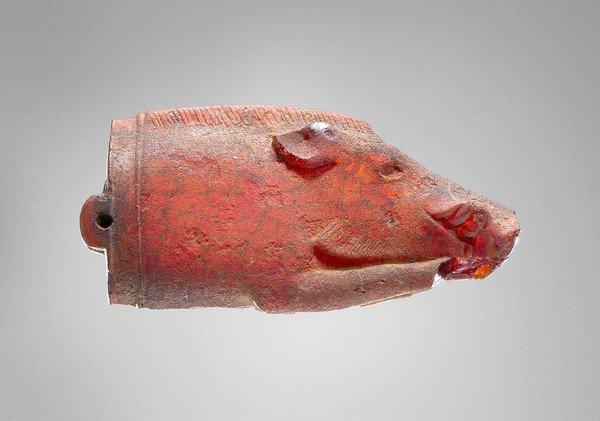
The Getty's amber collection includes this object circa 525-480 B.C.
A problematic Amber piggie?

Jason Felch reported for the LA Times on Saturday on an effort by the Getty to verify the histories of some 45,000 antiquities in its collection, and publish these results in its online database.

The review is likely to reveal that problems in the Getty’s collection go far deeper than the nearly 50 looted objects returned since 2007 , according to Getty records and interviews with antiquity dealers and former museum officials. Hundreds of objects still in the collection were acquired with false ownership histories aimed at disguising their origins in the illicit antiquities trade, records and interviews show. The depth of its problem was underscored in November, when the Getty published a catalog of 56 carved ambers, objects that the ancient Greeks and Etruscans used in amulets for the magical properties they were believed to possess. At first look, “Ancient Carved Ambers in the J. Paul Getty Museum” represents the museum at its finest — decades of scholarship published online in an illustrated catalog that engages the public in a rarely studied artifact of the ancient world. But records — including internal Getty files — show that the ambers were almost certainly looted from tombs in northern Italy.

This will be a fascinating effort to track in the coming months. The Getty is conducting this retroactive history search, and is a very good effort. The point to note though is how deep this examination goes into the objects, and whether it will trigger continued returns. Will the nations of origin even want the return of all of this study material? Will these nations have the capacity to store and study these objects in the same way the Getty can? Is this a contradiction the Getty hopes to make? All interesting questions.

  1. Jason Felch, Getty studies its antiquities, Los Angeles Times, January 19, 2013, http://articles.latimes.com/2013/jan/19/entertainment/la-et-getty-ambers-20130119.
Questions or Comments? Email me at derek.fincham@gmail.com

Challenges for Preservation in Dahshour, Egypt

This Pyramid at Dahshour is being threatened

In Egypt at the Dahshour necropolis, modern cemetery expansion and looting are putting the much older pharaonic necropolis at risk. The AP reports that the locals are building new tombs, police are unable to enforce regulations and secure the site. But worst of all the piece speculates that the new Islamist regime holds little respect for the ancient past. Here’s a flavor:

In the case of Dahshour, villagers say their cemeteries are full and authorities don’t give permits or land for new ones. So they took matters into their own hands and grabbed what they insist is empty desert to erect family tombs. “The dearest thing for us is burying our dead,” said Mohammed Abdel-Qader, a resident of nearby Manshiet Dahshour. “This land here is wide and flat, it’s a valley. Where are the antiquities they talk about? … We have no antiquities here.”
. . .
The cemetery expansion is the most dangerous encroachment yet because of how close it comes to the Dahshour monuments, which are on the UNESCO World Heritage site list, Younes said. Moreover, Dahshour is largely unexcavated, since the area was a closed military zone until 1996. What remains buried is believed to be a treasure trove shedding light on the largely unknown early dynasties. “When you build something over archaeological site, you change everything. We can’t dig in and know what is inside,” Younes told The Associated Press. “This is the only virgin site in all of Egypt.” 

 The story notes that the construction of new tombs, though illegal, may also be cover for looting. The piece paints a troubling picture. Consider the difficult time Egyptian officials must have had in protecting and preserving a site like this. They must weigh the concerns of angry local populations, be wary of the more dangerous antiquities looters, and also work to preserve the site.

Questions or Comments? Email me at derek.fincham@gmail.com

Getty Announces Return of Morgantina Terracotta Head

The head of Hades, likely looted from
Morgantina, to return to Aidone in 2014

I’ve received a press release from the Getty announcing it will voluntarily return this terracotta head to Italy, specifically Sicily. It depicts the god Hades, and may date to 400-300 B.C.

The Getty press release is slim on details of the acquisition and on what circumstances led to the decision to make a voluntary return. The release states that “joint research” with colleagues in Sicily since 2010 has brought new information to light “suggesting that it was appropriate to return the object”. The evidence is the discovery of four other terracotta fragments near Morgantina which must match this head in some way. The only mention of wrongdoing in the release states that these four fragments were uncovered at “the site of a sanctuary of Demeter, which was clandestinely excavated in the late 1970s.”

The language of the release is careful and I guess serves its purpose. I wonder if there is room here for an analysis of the shape and form that these press releases. I think so. Think about how it differs and resists the words we often use to describe this activity. The words ‘repatriation’, ‘Italy’, ‘looting’, and even ‘crime’,  are not mentioned. But despite the problem I have with the language, it appears from the release as if the Getty is doing cultural justice here. The object was looted and it is returning home soon. But I’m left wondering how many other objects from sites like Morgantina does the Getty retain. The release ties the return to the discovery of physical evidence at the site, and connects this with the object. But what about the contemporary evidence like who bought the object from who and what questions were asked when an object was acquired. We know from investigative reporting like Chasing Aphrodite how little inquiry was made. But this would be so much more direct, cheaper and useful than elaborate scientific tests. My rule of thumb when visiting a museum is, if they don’t tell you about the history of an object, there is very good chance it was looted.

This head will be transferred over to the Archaeological Museum in Aidone, where it will likely be displayed near “la dea di Aidone” previously known as the Getty goddess, returned in 2010. The head first will be a part of a Getty-organized traveling exhibition titled “Sicily: Art and Invention between Greece and Rome” which will start at the Getty, stop off at the Clevelend Museum of Art, and culminate in Palermo in June 2014.

Questions or Comments? Email me at derek.fincham@gmail.com

Student Note on "Cultural Revival in the New Libya"

Kim Lee has authored a student note entitled “The Amaigh’s Fight for Cultural Revival in the New Libya: Reclaiming and Establishing Identity Through Antiquity“, 11 Seattle Journal for Social Justice 1 (2012). From the introduction:

A look at the Amazigh and the ongoing conflict in Libya illustrates this issue. This article seeks to investigate the problems that are caused by a lack of governing laws and conventions by using the Amazigh as a lens into the issue, and to serve as a catalyst for further exploration of the subject. This article’s primary purpose is to draw attention to the debate about indigenous antiquities and cultural property, while acknowledging that events surrounding the debate are constantly developing. More specifically, this article asserts four main points. First, because indigenous communities are already underrepresented in their societies, a barrier is created that prevents the recognition of threats to their archaeological artifacts and cultural property. Second, there is often a dearth of information associated with antiquities of indigenous communities, making current bodies of law difficult to apply. Third, even if such information were available, current international law is still inapplicable because it is seriously inadequate when it comes to addressing indigenous artifacts and cultural property. And fourth, the complex nature of But very few of these conventions and treatises address indigenous antiquities and cultural property. This is especially true when an indigenous community has been oppressed by a governing regime that is later overthrown, and when specific information regarding the indigenous community’s antiquities is difficult to obtain or perhaps even nonexistent. Given the large number of indigenous communities in the world, this is an issue that must be addressed. A look at the Amazigh and the ongoing conflict in Libya illustrates this issue. This article seeks to investigate the problems that are caused by a lack of governing laws and conventions by using the Amazigh as a lens into the issue, and to serve as a catalyst for further exploration of the subject. This article’s primary purpose is to draw attention to the debate about indigenous antiquities and cultural property, while acknowledging that events surrounding the debate are constantly developing. More specifically, this article asserts four main points. First, because indigenous communities are already underrepresented in their societies, a barrier is created that prevents the recognition of threats to their archaeological artifacts and cultural property. Second, there is often a dearth of information associated with antiquities of indigenous communities, making current bodies of law difficult to apply…

Questions or Comments? Email me at derek.fincham@gmail.com

The Best Heritage Writing of 2012

Thanks to everyone who has stopped by at one point or another here this year. I wanted to share below some of my favorite writers, reporters and bloggers writing about cultural heritage this past year.

One of my favorite stories this year was Nancy Greenleese’s profile of Dr. Laurie Rush at the annual ARCA conference and her work with others to raise awareness in the U.S. military to the destruction of archaeology. Dr. Rush’s writing on the use of cultural property as a ‘force multiplier‘ was an example of thoughtful practical action that can be taken to secure heritage.

In terms of blogging, every year more and more voices join the blogosphere, and its always a pleasure to see more and more voices enter the conversation and offer unique perspectives. I found myself reading every post at Jason Felch and Ralph Frammolino’s Chasing Aphrodite which has taken the investigative reporting of their book and expanded its scope to include other figures in the antiquities trade, including Douglas Latchford, and Subhash Kapoor. First-class investigative reporting has been one of the cornerstones of the heritage protection movement, and their thoughtful thoroughly researched writing has been a terrific resource.

Speaking of reporting, I want to highlight in particular the reporting of PRI’s The World, which has offered some of the best first-hand accounts of antiquities looting, especiall the ongoing looting in Egypt and in Syria. The New York Times also has a dynamic reporting team in Tom Mashberg and Ralph Blumenthal, who have done excellent reporting on Cambodia’s efforts to block the auction of a disfigured and looted Koh Ker statue at Sotheby’s in New York.

For those interested in the day-to-day developments in the American legal system, Rick St. Hilaire’s wonky ‘cultural heritage lawyer‘ does a terrific job updating the progression of cultural heritage prosecutions and seizures. His coverage of the Peter Weiss coin smuggling prosecution, Subhash Kapoor, and the Ka Nefer Nefer were particularly outstanding.

Though I haven’t read all the entries, the ambitious and much-needed encyclopedia being compiled by the Trafficking Culture folks will surely stand as an important resource for many years to come, it’s a must-read for anyone interested in the field. Entries on the ‘Fano bronze‘, Giacomo Medici and Gianfranco Becchina are particularly excellent examples.

In case you missed it, some of my personal favorite moments of the year including teaching a field class in Cerveteri with Stefano Alessandrini with the ARCA class of 2012, experiencing the salt mines and graffiti trains of Kansas, coaching another super group of lawyer’s to be at the cultural heritage competition moot court competition in Chicago, and visiting the best student art history conference, the Arthattack conference at Guelph.

And lastly, though its not writing, the moving documentary ‘Lost Bohemia‘ by Josef Birdman Astor is the best examination on film I’ve seen to chronicle the importance of preservation in all its forms. It is a straightforward effort to save something which is at risk. But its emotional core is the lives and decline of the artists it presents. Preservation is such an urgent thing when its impacting a living community. And though it was released in 2010-11, it was new to me this year. The documentary presents the residents who had been living for decades in the studio apartments above Carnegie Hall. The dancers, photographers, actors, music makers, writers and other characters had created this idyllic creative scene, and were being removed for the creation of offices and cubicles for Carnegie Hall. It’s not got a happy ending, but reinforced for me why heritage matters and how much hard work even small victories require. I’ll leave you with the trailer, please seek it out where you can find it.

Cheers to 2012 and thanks for reading!

Questions or Comments? Email me at derek.fincham@gmail.com