Roof Tiles and Bronze Feet: What Sites Remember

Two places in the news this fall show how much an archaeological site can still tell us about objects that left it long ago. At Cerveteri, archaeologists have proposed that roof ornaments now in Berlin and Copenhagen perhaps originated from a newly excavated Etruscan temple. At Boubon, in southwestern Türkiye, evidence from the site helped send a Roman bronze home from Cleveland.

The news from Cerveteri concerned a monumental temple at Vigna Marini Vitalini. A Queen’s University team uncovered its foundations in 2024 and dated the temple to the early fifth century BCE. The detail that caught my attention was in the excavation report. Earlier digs in the nineteenth century had sent architectural terracottas from the site into museum collections. The archaeologists identified three antefixes, ornaments that capped the ends of roof tiles, now in Berlin and Copenhagen. Archival records put them in the same area as the new excavation. Their date, clay, and decoration suggest they may have belonged to the temple’s roof.


A second Cerveteri story from this month shows the other way objects leave a site. At Monte Abatone, one of Caere’s (as it would have been called in ancient times) main cemeteries, emergency work to shore up collapsing tufa chambers turned up rock-cut thrones, walls with wide patches of red paint, and a nearly intact stamnos decorated with incised animals. Nobody planned a discovery. The tombs had been looted at some point in the past, and the jar survived only because the diggers missed it. The regional archaeological superintendency says it will go on display after conservation.

Taken together, the two Cerveteri finds show why the manner of an object’s removal matters as much as where it ended up. The nineteenth-century diggers at Vigna Marini Vitalini were not careful by modern standards. Still, they left enough of a paper trail that archaeologists can now trace three antefixes back to a single roof. Whoever emptied the Monte Abatone tombs left a damaged chamber and the pot they overlooked. Whatever they took is now somewhere without a findspot, and no archive will ever connect it to the thrones it was buried beside. Cerveteri has drawn this kind of digging for a long time. The Euphronios krater, which the Metropolitan Museum of Art returned to Italy in 2008, was dug out of a tomb near the town in 1971.

This bronze statue was formerly described by the Cleveland Museum of Art as likely depicting Roman emperor Marcus Aurelius as a philosopher. Now it is described as Draped Male Figure, around 150BCE-200CE. Roman or possibly Greek Hellenistic. The Cleveland Museum of Art
This bronze statue was formerly described by the Cleveland Museum of Art as likely depicting Roman emperor Marcus Aurelius as a philosopher. Now it is described as Draped Male Figure, around 150BCE-200CE. Roman or possibly Greek Hellenistic.

On November 2, the Istanbul Archaeological Museums opened No Escape: Boubon, an exhibition that brings together Roman imperial bronzes and fragments dispersed after looting in the 1960s. The sculptures once stood in the city’s Sebasteion, a sanctuary dedicated to the emperors and the imperial family. As Elizabeth Marlowe has explained, villagers found the bronzes in the 1960s and sold them to traffickers. When Turkish authorities arrived in 1967, mostly empty pedestals remained, inscribed with the names of fourteen emperors and empresses. The Turkish archaeologist Jale İnan spent years working with other scholars to match those bases to bronzes scattered across foreign collections.

One of those bronzes, a headless draped figure, spent nearly four decades at the Cleveland Museum of Art. Cleveland bought it in 1986 from the dealer Charles Lipson, who sold three of the four other Boubon pieces seized in the United States since 2022. For years its label read “The Emperor as Philosopher, probably Marcus Aurelius,” from “Bubon(?)” in Lycia. When the statue debuted in 1987, the museum displayed photographs of other Boubon statues beside it. By the time Manhattan prosecutors seized it in 2023, Cleveland had renamed it “Draped Male Figure” and said its identity “remains unknown.” Marlowe argued in The Art Newspaper that these erasures were “a defensive response by the museum.” Cleveland challenged the seizure, then agreed in February 2025 to transfer the statue after new scientific testing. Among the evidence linking the figure to Boubon was the fit between molds of its feet and the recesses in a stone pedestal at the site. Cleveland’s 2025 release still says the statue is probably not Marcus Aurelius but a Greek philosopher. The Turkish announcement calls it the Marcus Aurelius statue.

Cleveland was not the only museum to hold on to a Boubon bronze. In a guest post here, Marlowe took on the Ny Carlsberg Glyptotek’s over-life-size head of Septimius Severus. Robert Hecht first sold the head, and the museum bought it in 1970. Whether it fit a body seized from the Metropolitan Museum was, she argued, a secondary matter. The real issue was whether the head came from Boubon. On her three criteria, it plainly did: it depicts an emperor, it surfaced on the market between 1964 and the early 1970s, and it has square bronze repair patches. The Glyptotek returned the head to Türkiye in late 2024.

There was an even closer parallel to Cerveteri at the Istanbul opening. Türkiye also presented 100 antiquities returned from the United States, among them 44 architectural terracotta fragments from Düver that the Getty had acquired between 1977 and 1979. Those roof fragments came from a different site than the Boubon bronzes. Türkiye has already brought home other Düver pieces, from the United States in 2022, Denmark in 2024, and the Virginia Museum of Fine Arts in 2025. I’d be interested to see what researchers can learn about the buildings at Düver once they can study these fragments alongside pieces already returned.

These stories raise different questions about ownership. At Cerveteri, the proposed match gives Berlin and Copenhagen a reason to revisit how they catalogue and display the roof ornaments. At Boubon, evidence from the site helped resolve a contested seizure. The Glyptotek has been involved in both stories. It returned its Boubon head in 2024, and it still holds a Cerveteri antefix whose nineteenth-century excavation left enough of a record to trace. Monte Abatone shows what happens when there is no record at all. Little that the looters took from those tombs can be matched back to them. These stories make a case for putting excavation records, archival photographs, and museum files in conversation. A catalogue can tell us when an object entered a museum. The clay of an antefix or the recesses in a stone base can tell us where it was before it got there.


Fabio Colivicchi et al., The 2024 Field Season at Caere, Vigna Marini Vitalini: A New Etruscan Temple and Its Surroundings, 28 Etruscan & Italic Stud. 158 (2025), https://pmc.ncbi.nlm.nih.gov/articles/PMC12645824/;

Tutte le nuove scoperte archeologiche di ottobre 2026. Dal relitto romano fantasma al ricco guerriero dei Balcani, Artribune (Nov. 4, 2026), https://www.artribune.com/arti-visive/archeologia-arte-antica/2026/11/nuove-scoperte-archeologiche-ottobre-2026-balcani-cerveteri-liguria/;

Antefix with silenus head, HIN 55, Ny Carlsberg Glyptotek, Tracking Colour, http://trackingcolour.com/objects/122 (last visited Nov. 11, 2026).

Dario Radley, Emergency repairs at an Etruscan cemetery in Italy uncover carved thrones, painted walls and a nearly intact jar, Archaeology News (Nov. 8, 2026), https://archaeologymag.com/2026/11/etruscan-cemetery-in-italy-carved-thrones-and-jar/.

‘No Escape: Boubon’ exhibition brings scattered heritage together, Hürriyet Daily News (Nov. 3, 2026), https://www.hurriyetdailynews.com/amp/no-escape-boubon-exhibition-brings-scattered-heritage-together-228916.

Elizabeth Marlowe, Bronze Roman statue, believed to have been looted from Turkey, seized from Cleveland Museum of Art, The Art Newspaper (Aug. 31, 2023), https://www.theartnewspaper.com/2023/08/31/cleveland-museum-art-roman-bronze-turkey-loot-seized.

Elizabeth Marlowe, Marlowe on the Real Issue with the Glyptotek Head, Illicit Cultural Property, http://illicitculturalproperty.com/marlow-on-the-real-issue-with-the-glyptotek-head/.

Danish Museum returns Roman Bronze Portrait to Türkiye, ArtDependence (Dec. 3, 2024), https://artdependence.com/articles/danish-museum-returns-roman-bronze-portrait-to-tuerkiye/.

Press Release, Cleveland Museum of Art, Cleveland Museum of Art and District Attorney of New York Reach Agreement on Draped Male Figure (the Philosopher) (Feb. 14, 2025), https://www.clevelandart.org/about/press/cleveland-museum-art-and-district-attorney-new-york-reach-agreement-draped-male-figure.

Press Release, Getty, Statement from Getty Regarding Return of Fragments to Türkiye (June 24, 2026), https://www.getty.edu/news/getty-fragment-return-turkiye/.

Questions or Comments? Email me at derek.fincham@gmail.com


The Art Institute Chicago Schiele Ruling and the Limits of Object-First Enforcement

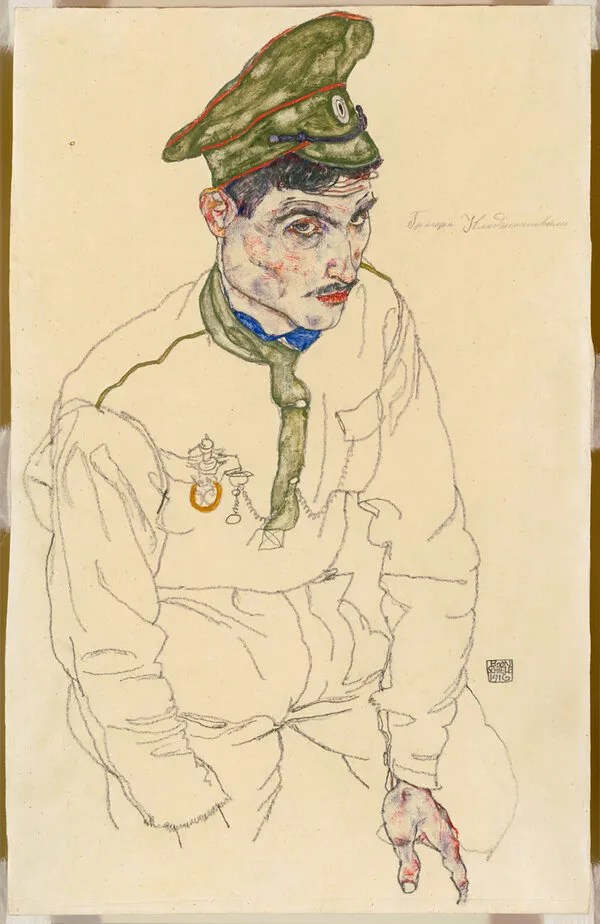
On Thursday the New York Appellate Division, First Department handed the Art Institute of Chicago a significant win in its long dispute over Egon Schiele’s Russian War Prisoner. Graham Bowley and Tom Mashberg’s report in the Times frames it as a blow to the Manhattan DA’s investigators. I’d go a step further. This ruling lands on the signature feature of the Antiquities Trafficking Unit’s method, which is that it goes after the objects first and worries about the people later.

Egon Schiele, "Russian War Prisoner" (1916), watercolor over graphite on cream paper. It shows the head and hand of a uniformed Russian prisoner of war, with the artist's signature at lower right.
“Russian War Prisoner” by Egon Schiele, via Manhattan District Attorney

To be precise about what the court did: it did not decide that the Art Institute owns the drawing. It didn’t decide that the drawing was looted, or that it wasn’t. It decided that a turnover order under Penal Law § 450.10 was the wrong tool for a sharply contested ownership dispute. The court vacated the warrant and the orders requiring the museum to surrender the work, and it said in terms that its decision shouldn’t be read as a determination of the rightful owner. It sent the title question to the earlier-filed civil case in federal court in the Southern District of New York.

A quick recap

Fritz Grünbaum was a Viennese cabaret performer and an outspoken critic of the Nazis. He was arrested in March 1938 and died in Dachau in 1941. His collection of dozens of Schiele works was inventoried by the Nazis, and then, for the most part, vanished from the record until 1956, when pieces surfaced with the Swiss dealer Eberhard Kornfeld. Some went on to Otto Kallir’s Galerie St. Etienne in Manhattan, and Russian War Prisoner was ultimately bought by the Art Institute in 1966.

The DA’s Antiquities Trafficking Unit took an interest after Grünbaum’s heirs came to them in 2022. In September 2023 authorities in New York seized the drawing in place at the Art Institute, along with two other works in Pittsburgh and Ohio, on the theory that they were stolen from Jewish families by Nazis. The other two institutions, the Carnegie and Oberlin’s Allen Memorial, returned their Schieles in January 2024. The Art Institute did not, and the museum insisted the work was not looted but lawfully sold by surviving family members after the war.

Picture of a man in a suit, black and white, autographed.
Fritz Grünbaum, Österreichisches Theatermuseum, public domain photograph via https://commons.wikimedia.org/wiki/File:Fritz_Gr%C3%BCnbaum.jpg

Meanwhile the heirs’ separate civil suit had been dismissed by Judge Koeltl as time-barred, a ruling he declined to revisit in February 2024. In April 2025, Justice Drysdale sided with the DA. The ruling ran 79 pages and described the drawing as stolen property for the last 86 years. She reached that conclusion without an evidentiary hearing.

Why the appeals court said no

For a first-year-property-class reason, mostly. Section 450.10(5) says stolen property that comes into a court’s custody is to be delivered to the owner “on satisfactory proof of his title.” The Appellate Division reads that as a mechanism for quickly returning property to an obvious owner, not as a way to adjudicate a hotly contested title. The statute doesn’t say who decides title, what procedure applies, or who bears what burden. And the court leaned on a 1913 Court of Appeals decision, People ex rel. Simpson Co. v. Kempner, which said a title dispute between contending parties “must be determined in a civil action,” with notice, a hearing, and a jury if demanded.

The court was also unimpressed by the DA’s description of what happened below as “summary judgment-like.” There were no pleadings, no meaningful discovery, and no defined burdens of proof. And because the turnover orders can’t be appealed directly, the Art Institute could only get review through an Article 78 petition for a writ of prohibition. The court treated a deprivation of property without due process as the kind of clear legal right that makes that extraordinary remedy appropriate.

The object-first model

Here is what I think matters beyond this one drawing. According to the opinion, the DA told the court that New York County judges have signed more than 100 turnover orders, returning more than 4,000 antiquities and artworks. The NY Times reports how those cases typically end: rather than bring criminal charges and face potentially lengthy cases, investigators negotiate agreements, and the holders usually hand over the objects without contesting that they were stolen.

That is an object-centered model, and it has been enormously productive. In its statement to the Times, the DA’s office pointed to the return of more than 6,000 stolen artifacts. But the same statement cites 18 convictions. I don’t want to be unfair about that comparison, because convictions and objects measure different things. Still, it captures a pattern I wrote about after the Worcester seizure : the objects are returning to where they were taken from, but the prosecution of the individuals responsible has lagged well behind.

The object-first approach worked because it let everyone skip the hard part. A holder who cooperates gets no charge, no trial, and a quiet press release. The office gets the object and a headline. Nobody has to prove that a particular person committed a particular crime, and nobody has to adjudicate title. The Art Institute is, so far as I can tell, the rare possessor to refuse the deal and then follow through on the refusal, all the way to a writ of prohibition. The opinion also notes that the DA brought no criminal charges in connection with the work.

Why Schiele works are so contested

This is the part I think a general audience finds most interesting, and the reasons pile up.

First, the objects are portable and the paper trail is thin. Schiele’s works on paper are small, easy to move, and were easy to lose track of in the mass spoliation of 1938 to 1945. The Nazi inventory of Grünbaum’s property listed 81 Schiele pieces but, as the court notes, did not list Russian War Prisoner by name. Identifying a specific drawing with a specific line in a wartime inventory is a big part of the fight.

Second, there is a gap and a story to fill it. Nothing is documented between 1938 and 1956. Kornfeld filled it by saying he had bought the works from Grünbaum’s sister-in-law, Mathilde Lukacs. The Appellate Division in Reif v. Nagy did not credit that account, and this opinion recites why: no documentation of a transfer, no mention of Lukacs in earlier catalogues, and a claim made decades after the fact. The Art Institute still relies on the Lukacs account, as does the museum’s position that the family lawfully sold the work. That account has worked before: in Bakalar v. Vavra, the heirs lost a case involving a different Grünbaum Schiele on laches grounds, which is a reminder of how much turns on which court you’re in and which doctrine is doing the work.

Third, the money. The Grünbaum heirs sold six Schieles at Christie’s in fall 2023, and four of them collectively fetched $18 million. That helps explain both why heirs pursue these works so persistently and why holders defend them so hard.

Fourth, the New York connection. Kallir’s Manhattan gallery handled a good number of these works after the war. That’s what gives a New York prosecutor a jurisdictional hold on a drawing that sat in Chicago for sixty years, and it is exactly the connection the Art Institute has challenged.

Finally, the Art Institute’s own conduct. The opinion recites that there’s no record of a provenance check in 1966, and that in 2002 a museum intern asked Kornfeld about the work and there is no record the museum ever tried to independently verify his answer. The Second Circuit, when it revived the civil suit in March 2025 in a non-precedential summary order, said the Art Institute isn’t an ordinary non-merchant purchaser but a sophisticated one with expertise in Nazi-looted art. Nothing in this week’s decision undercuts that.

The reaction

The museum welcomed the ruling, telling the NY Times that the court rejected an unlawful attempt to use the criminal process to resolve disputed property rights, and that the matter belongs in civil court. The DA’s office said it is reviewing the decision and evaluating next steps. Two museum groups, the Association of Art Museum Directors and the American Alliance of Museums, had filed a joint brief supporting Chicago.

Nicholas O’Donnell, who represented a family that turned over another artwork in 2024, told the NY Times the decision “sharply reduces the D.A.’s ability to pursue the seizure of cultural property.” As the NY Times summarizes his view, owners accused of holding stolen art could now decline to hand it over unless a criminal case is brought, a crime is proven, and title is fully adjudicated. Raymond Dowd, who represents one of the Grünbaum heirs, sharply criticized the reasoning, comparing the objects to contraband that police can seize the way they seize drugs or drug money. Legal experts told the NY Times it is unlikely that holders who already returned works would try to reopen those seizures.

The ruling doesn’t just slow the DA down. It changes the price of contested cases. Where a holder disputes title, the shortcut is closed, and the office has two choices: bring a criminal case against someone, or send the claimants to civil court. That pushes toward what I’d argue was always the harder and more important work, which is investigating and prosecuting the dealers, middlemen, and facilitators who moved this material.

That work has its own problems. In the Schiele story, the central figures are dead. Kallir died decades ago, and Kornfeld is described in recent reporting as the late dealer. The trial court itself noted that every witness with first-hand knowledge of the wartime events had died. You can’t indict a dead man, and a “continuing conspiracy” theory of the kind the trial court accepted is a long way from a case a prosecutor can try. Proving a crime against a living person means proving what that person knew, and gaps in provenance, however damning they look to us, are not the same thing. So for Nazi-era claims like this one, the civil courts really may be the only place a resolution is possible, which is more or less what the Appellate Division said.

The picture is different for the antiquities trade the unit built its reputation on. There, the dealers, collectors, and trusts are often alive, the records are more recent, and the networks are the story. If the office is now pushed away from the easy object-first seizure, the question is whether it has the appetite and the resources to build cases against people. I hope so. The illicit market runs on the individuals who supply, launder, and buy them.

There is a fair case on the other side, too. Dowd’s point deserves a serious answer: police do seize contraband without a trial, and a museum drawing with a disputed, decades-old chain of title is arguably not the same thing as a looted Cambodian statue. Voluntary returns will also presumably continue. Many holders return works because they don’t want the fight, not because a statute compels them, and nothing in this ruling stops that. And it’s possible that the unit will simply reach for other tools. The DA said only that it is evaluating its next steps.

Procedurally, the Appellate Division stayed enforcement for 30 days, and the grand jury investigation can continue. The action that matters now is in federal court, where the case has been stayed pending this decision. There the parties will have what the Appellate Division said was missing: discovery, defined burdens, and a real fight over the evidence. For the heirs, who have waited nearly two decades, that is at once a setback and a chance to finally litigate the merits.

I’ll be watching for whether the next big move from Manhattan is another seizure, an appeal or something else. And nothing here would prevent the parties from coming to some kind of truce and settling their dispute outside of court.

Many thanks to the reporters who’ve followed this for years, especially Graham Bowley and Tom Mashberg at the Times, and The Art Newspaper.


Sources and further reading

Court decisions

Reporting

Commentary and analysis

Alleged Bubon Smuggling Network Widens

A bronze bust removed from the collection of the Worcester Art Museum

An ancient Roman bronze bust has been seized from the Worcester Art Museum. The seizure is the latest recovery by the Manhattan district attorney’s office Antiquities Trafficking Unit, which also includes material from the Cleveland Museum of Art, the Met, Fordham University and Christie’s. Details on the seizure from Worcester are difficult to ascertain, as we are left mainly with a press release from the Museum, and a “no comment” from the Manhattan DA. The Museum will “transfer ownership” to the New York County District Attorney’s Office” so that it can then be returned to its country of origin. Ownership is the wrong term here, possession would be more appropriate.

The transfer of possession was prompted with the benefit of “new information about the object’s history of ownership”. It had been acquired in 1966, reportedly from the late antiquities dealer Robert Hecht. And may belong to the collection of ancient Roman bronzes from the Bubon area of Turkey.

The initial question is why did the museum voluntarily return the object? Perhaps it considered mounting a legal challenge, yet the Museum’s statement would seemingly have us think that it would return all other similarly improperly imported and acquired objects. It asks forgiveness on the basis that it has not been able to prioritize provenance research of its existing collection due to limited resources. The likely speculation goes then that had it had such an initiative in place, it would have sent the object back. That adds an interesting wrinkle to the difficult task of Museum publicists when forced to account for the presence of illicit material for so many decades.

The Antiquities Trafficking Unit has made a considerable dent in the number of illicit objects in various museum and private collections. The objects are returning to where they were illicitly removed from, but the prosecution of the individuals responsible remains elusive.

Tom Mashberg, Manhattan Prosecutors Seize a Bronze Bust Valued at $5 Million, The New York Times (Sep. 3, 2023), https://www.nytimes.com/2023/09/03/arts/design/manhattan-prosecutors-seize-3rd-century-bust.html.

Malcolm Gay Globe Staff et al., How Could Smuggled Roman Art Have Ended up at the Worcester Art Museum? – The Boston Globe, BostonGlobe.com, https://www.bostonglobe.com/2023/09/05/arts/how-could-smuggled-roman-art-have-ended-up-worcester-art-museum/ (last visited Sep. 7, 2023).

Worcester Art Museum Transfers Ownership of Bronze Bust, https://www.worcesterart.org/news/press-room/press-releases/PR/worcester-art-museum-portrait-of-a-lady-press-release.pdf, archived at https://perma.cc/7QX4-GT2D (Sep. 2023).

Roman Bust Seized from US Museum in Investigation into Stolen Pieces, the Guardian, https://www.theguardian.com/culture/2023/sep/06/stolen-art-massachusetts-worcester-museum (last visited Sep. 7, 2023).

Ancient Roman Bust Seized from U.S. Museum in Trafficking Probe, Washington Post, https://www.washingtonpost.com/entertainment/art/2023/09/06/worcester-art-museum-roman-bust/.