The Met Announces the Return of two statues to Cambodia

Today, Ralph Blumenthal reports that the Met has agreed to return two 10th century statues to Cambodia. The Met’s director Thomas Campbell is quoted as saying:

This is a case in which additional information regarding the ‘Kneeling Attendants’ has led the museum to consider facts that were not known at the time of the acquisition and to take the action we are announcing today.

 The piece reports the statues may have been removed from Cambodia at around the same time the Koh Ker statue was removed, which is the subject of an ongoing forfeiture action by a federal prosecutor. Little information has been reported that I can find on the precise circumstances surrounding the removal of these statues from Cambodia. We know the instabality and conflict taking place in southeast Asia at the time of course. The statues were donated by Douglas Latchford in a series beginning in 1987. The parts of the statues were broken into pieces at some point, and the individual pieces of the figures were donated between 1987-1992. Conservators at the Met reattached the heads and bodies in 1993.

The Met should be congratulated for doing the right thing here with these objects which have such an important connection to Cambodia. This return may also give pause to Sotheby’s, the Norton Simon museum, and others who have objects which were removed from Cambodia during this period.

Blumenthal, Ralph. “The Met to Return Statues to Cambodia.” The New York Times, May 3, 2013, sec. Arts / Art & Design. http://www.nytimes.com/2013/05/04/arts/design/the-met-to-return-statues-to-cambodia.html.
Questions or Comments? Email me at derek.fincham@gmail.com

Can the Hopi Thwart the Sale of Sacred Objects in Paris Next Week?

A Hopi helmet representing the Crow Mother (more slides via NYT)

Next week the Néret-Minet auction house in Paris will auction a number of Hopi objects, many of which are more than 100 years old, and many of which are considered sacred. Leigh J. Kuwanwisiwma, director of the Hopi Cultural Preservation Office in Kykotsmovi, Arizona says of the objects: “Sacred items like this should not have a commercial value. . . . The bottom line is we believe they were taken illegally.”

The auction house claims that the objects were purchased as early as the 1930’s, and that all the objects were sold as long ago as the 1960’s.

Tom Mashberg reports for the New York Times that:

Historians say many Hopi artifacts were taken long ago by people who found them unattended in shrines and on altars along the mesas of the Southwest. Others were confiscated by missionaries who came to convert the tribe in the late 19th century. Some were sold by tribe members. But even those sales were not legitimate, Hopi leaders say, because they may have been made under duress, and because the tribe holds that an individual cannot hold title to its religious artifacts — they are owned communally.

This of course is why many of these objects were acquired in the last century. The Hopi have a fundamentally different view of property and sacred objects. They have a communal relationship to these objects. When that view of objects is linked with western legal systems, the results can be messy. But I think there are a number of legal challenges that can be made to the auction of these objects.

Possible action could include an action for the recovery of stolen property. The Hopi would have to establish that they have a relationship to these objects that is sufficient to allow a French court to deny the sale. Or the United States government could intervene and protest the sale on the grounds some of the objects were removed from Federal or tribal lands and are considered stolen under the Archaeological Resources Protection Act. But the difficulty with both of those legal options is the problem of proof.

The best chance for a quick resolution to the sale may be to generate enough headaches for the auction house, the consignor, and any potential buyers. The New York Times piece will help raise the profile for the auction, but it will also require some vocal and I’m sorry to say expensive, actions on the part of the Hopi or their advocates.

In a case like this, it is true that seldom have we seen works of art from the United States exported and sold in a way which upsets the creator culture. If the market for Native American art continues to be this robust, it may take more concerted action on the part of the Federal government to intervene. I don’t think this is an issue of uneven application of international cultural heritage law, much of which is soft. The reporting and some reaction seems to suggest the U.S. does a better job of helping foreign nations in their efforts to repatriate. I don’t get the sense that that is right. Rather I’m not sure we have a good robust set of tools to seek repatriation from abroad when it is warranted. And there are a number of reasons for that. For one, I don’t think Native American tribes have been confronted with this problem very often either because it didn’t happen or they weren’t aware. But also we don’t have a good organized cultural apparatus in the United States. We rely on lots of very capable Museums and other organizations. But in the case of international repatriation. It really helps to have an active and organized set of voices acting in concert. We just don’t have that in the United States. So there are challenges for the Hopi here, but other similar groups have shown that patient and persistent appeal to reason can impact the disposition of these objects.

Mashberg, Tom. “Hopi Tribe Wants to Stop Paris Auction of Artifacts.The New York Times, April 3, 2013, sec. Arts / Art & Design.

Questions or Comments? Email me at derek.fincham@gmail.com

The Race to Reform in the American Museum Community

The DMA returned ownership of this red-figure krater (4th century BC)—
Italian officials allowed the piece to remain at the museum on loan

Max Anderson is leading the way towards reform in the American Museum Community. The Director of the Dallas Museum of Art has an OpEd in yesterday’s Dallas Morning News responding to recent criticism in the New York Times of the decision by museums to return looted works of art. Here’s the introduction to the piece:

Protecting the world’s cultural heritage is essential to all of us. Like the natural environment, the material record of the past is irreplaceable and easily damaged. Whether you live in a country rich in archaeological finds, or a country with curiosity to learn about the past, every citizen wants to protect archaeological sites from intentional or accidental destruction. And every scholar and museum professional wants to share our most complete understanding of the objects and beliefs that people treasured in the past. The illicit trade of these objects is responsible for one of the largest international black markets, and the destruction of archaeological sites is often the result. It is not museum purchases that have been fueling the damage in recent years: As a result of strict, self-imposed guidelines, those acquisitions have slowed to a trickle over the last decade. However, private purchases are not subject to such guidelines and take place invisibly. Additionally, the construction of public works, from roads to buildings, causes undocumented harm to historic sites every day around the globe, not to mention accidental discoveries on private property, quickly hidden or destroyed. Natural disasters and armed conflict also take their toll on the world’s cultural heritage.

With this and other statements, Anderson is distinguishing himself and his institution from the old days of optical due diligence and the acquire-at-all-costs attitude of so many other American museums. Those policies have slowly been reformed, bu many still cling to that old idea, that these museums should acquire beautiful objects, despite the looting and theft which brought them to a shady international market. I hope that more and more museums look for more creative and sustainable means of acquisitions in the way Anderson has done. Nations of origin and foreign museums really do need each other. Now the mark of a great museum is not how many ancient objects it can acquire— in the past Anderson has called this lust for acquisition the desire to make museums ‘treasure houses’. Instead cooperators with nations like Italy will find collaborative relationships and long-term loans in exchange for cooperation in returning looted objects. Rather than hoard the ill-gotten acquisitions of the past, I think museums will find themselves working quickly to get at the head of the collaborative line with these nations. Anderson’s opinion piece, and the recent nudge towards reform in the AAMD guidelines are the most recent indication of what one hopes will be a positive shift.

  1. Maxwell Anderson, Giving back art — how museums see it, Dallas News, Feb. 8, 2013.
Questions or Comments? Email me at derek.fincham@gmail.com

Reactions to Hugh Eakin’s Anti-repatriation NYT Op-Ed

A recent looter’s pit in Cerveteri

I’m not sure who is editing the New York Times Sunday Review, but this Sunday’s piece by Hugh Eakin contained a stunning array of factual inaccuracies. To pick a passage:

Since 2006, more than 100 statues, bronzes, vases, mosaics and other works have left public collections in the United States. Among them was the Euphronios krater, depicting a scene from the “Iliad,” which awed visitors to the Met for decades, and a rare limestone and marble statue of a Greek goddess, which the Getty purchased for $18 million in 1988. In nearly every case, the museums have not been compelled by any legal ruling to give up the art, nor are they receiving compensation for doing so. And while a few of the returned works have been traced to particular sites or matched with other fragments residing in the claimant country, many of them have no known place of origin.
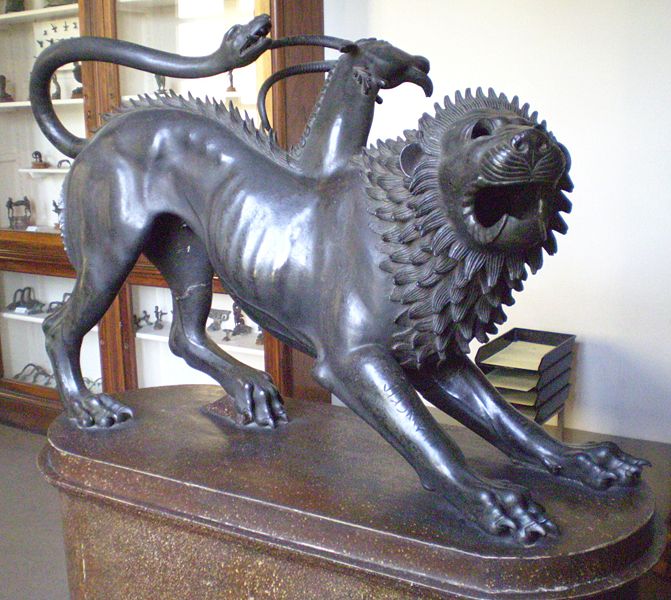
Eakin may not know, but these returns, particularly from the Getty, were accompanied by corresponding loans heading in the other direction. The bronze “Chimera of Arrezzo” is hardly nothing.

No mention is made of breaking up the once-called “Getty Goddess” to transport in the trunk of a car; nor the destruction of context. Having seen a looters pit and visiting these sites must I think cause any thinking person to change his or her views of the proper place for looted objects. Moreover, museums are repositories of works of art and cultural objects, but not at the expense of the rule of law. Eakin’s false claim that these objects were not returned with the benefit of a legal ruling breezes over the unassailable fact that many of these institutions have been challenged in court, and in many cases museums return objects well in advance of a legal ruling or claim lest their own curatorial staff be subject to criminal prosecution in the United States or abroad. Not every return can be so casually dismissed as museums making up evidence of theft and looting. It would be a bizarre legal system that said that so long as a murder occurs and the perpetrator can hop off to another country, the defendant should get off free and clear. But that’s the casual indifference displayed by Eakin. Here are a few other reactions.

Lynda Albertson, ARCA CEO notes that Eakin hasn’t been speaking with anyone in Rome:

Having just spent last Thursday, January 24th at the round table symposium at the Villa Giulia hosted by Alfonsina Russo, Superintendent Archaeologist for Southern Etruria, in reviewing the work conducted in these contentious cases over the last 15+ years I can assure you that extortion is not, nor has it ever been, a nefarious motive in seeking the return of Italy’s looted antiquities. Italy’s motive, if it can be summed-up in a simple statement, is to preserve and protect the country’s antiquities for all its generations and in doing so, by recording objects in their discovered contexts, expanding upon our knowledge of the ancient world.

David Gill also notes that just because we don’t see a lawsuit filed doesn’t mean the possibility wasn’t mentioned to recalcitrant museums:

He suggests that foreign governments have been threatening legal action over the return of antiquities. But I suspect that major museums have been secretly relieved to avoid that course of action. I do not know if Eakin has seen the photographic and documentary archives, but the thought of this material being unpacked in a courtroom where every image would be analysed in the media is one that would probably make the blood of most museum directors run cold. It is sufficient to say that Italy has probably claimed less than 1% of the objects in the photographic archives. This suggests great restraint, understanding and flexibility from the Italian authorities. But it also calls for flexibility from the North American museum community.

Rick St. Hilaire notes that stolen property cannot be lawfully retained:

Waiting for a court order to demand the repatriation of stolen or smuggled artifacts when potential settlement options are available disrespects the rule of law and undercuts a museum’s reputation. Attorneys, museum directors and trustees, museum donors, the general public, and the courts likely would not support the courtroom clashes resulting from “The Great Giveback’s” call to legal arms. Museums are highly respected, and there is an expectation that they will “do the right thing” by finding acceptable legal solutions before initiating or inviting litigation that might result in the forced return of stolen or smuggled property.

Lee Rosenbaum also notes the problems with reality in Eakin’s argument and rightfully argues it should have been ignored had it not graced the pages of the Grey Lady on Sunday:

Since Eakin has extensively covered the Cultural Property Wars in pieces for many publications, his misstatements and distortions regarding repatriations are likely to have been either deliberate or indicative of how much he has forgotten about what he once knew. A third possibility is that he is prone to blanket statements that he believes to be true but hasn’t adequately researched.

  1. Hugh Eakin, The Great Giveback, The New York Times, January 26, 2013, at 12.
A sample of some other essays from my own files demonstrate Eakin’s view has changed very little:
  1. Hugh Eakin, What Went Wrong at the Getty, New York Review of Books, June 23, 2011, http://www.nybooks.com/articles/archives/2011/jun/23/what-went-wrong-getty/?pagination=false (last visited Jun 6, 2011).
  2. Hugh Eakin, Italy Focuses on a Princeton Curator in an Antiquities Investigation, The New York Times, June 2, 2010, http://www.nytimes.com/2010/06/03/arts/design/03curator.html?pagewanted=all (last visited Jun 3, 2010).
  3. Hugh Eakin, Who Should Own the World’s Antiquities?, The New York Review of Books, May 14, 2009, http://www.nybooks.com/articles/archives/2009/may/14/who-should-own-the-worlds-antiquities/ (last visited Aug 27, 2011).
  4. Randy Kennedy & Hugh Eakin, Met Chief, Unbowed, Defends Museum’s Role, The New York Times, February 28, 2006, http://www.nytimes.com/2006/02/28/arts/28mont.html (last visited Aug 26, 2011).
  5. Randy Kennedy & Hugh Eakin, The Met, Ending 30-Year Stance, Is Set to Yield Prized Vase to Italy, The New York Times, February 3, 2006, http://www.nytimes.com/2006/02/03/arts/03muse.html&ref=euphronioskrater (last visited May 4, 2011).
Questions or Comments? Email me at derek.fincham@gmail.com

Getty Announces Return of Morgantina Terracotta Head

The head of Hades, likely looted from
Morgantina, to return to Aidone in 2014

I’ve received a press release from the Getty announcing it will voluntarily return this terracotta head to Italy, specifically Sicily. It depicts the god Hades, and may date to 400-300 B.C.

The Getty press release is slim on details of the acquisition and on what circumstances led to the decision to make a voluntary return. The release states that “joint research” with colleagues in Sicily since 2010 has brought new information to light “suggesting that it was appropriate to return the object”. The evidence is the discovery of four other terracotta fragments near Morgantina which must match this head in some way. The only mention of wrongdoing in the release states that these four fragments were uncovered at “the site of a sanctuary of Demeter, which was clandestinely excavated in the late 1970s.”

The language of the release is careful and I guess serves its purpose. I wonder if there is room here for an analysis of the shape and form that these press releases. I think so. Think about how it differs and resists the words we often use to describe this activity. The words ‘repatriation’, ‘Italy’, ‘looting’, and even ‘crime’,  are not mentioned. But despite the problem I have with the language, it appears from the release as if the Getty is doing cultural justice here. The object was looted and it is returning home soon. But I’m left wondering how many other objects from sites like Morgantina does the Getty retain. The release ties the return to the discovery of physical evidence at the site, and connects this with the object. But what about the contemporary evidence like who bought the object from who and what questions were asked when an object was acquired. We know from investigative reporting like Chasing Aphrodite how little inquiry was made. But this would be so much more direct, cheaper and useful than elaborate scientific tests. My rule of thumb when visiting a museum is, if they don’t tell you about the history of an object, there is very good chance it was looted.

This head will be transferred over to the Archaeological Museum in Aidone, where it will likely be displayed near “la dea di Aidone” previously known as the Getty goddess, returned in 2010. The head first will be a part of a Getty-organized traveling exhibition titled “Sicily: Art and Invention between Greece and Rome” which will start at the Getty, stop off at the Clevelend Museum of Art, and culminate in Palermo in June 2014.

Questions or Comments? Email me at derek.fincham@gmail.com

Is Cultural Heritage a Human Right?

One of the horses from a four-horse chariot group

The Guardian reported over the weekend that Turkey plans to petition the European Court of Human Rights for the return of sculptures from the mausoleum of Helicarnassus, currently held by the British Museum.  Norman Palmer is quoted in the piece, “I have not heard of it [human rights] being used to raise a claim for the specific restitution of particular tangible objects … This would be a novel claim.” That strikes me as exactly right, I’ don’t see a direct human right to specific cultural objects. And my initial reaction is skeptical of attempting to use a rights-based approach for repatriation. One difficulty that this principle will have is in application. How would a court decide what should be repatriated and what should not. Are all objects from a region tied to that people’s human rights? And is this right only related to the original situs of the object. Could Londoners argue that they have a corresponding human right in some of the objects in the British Museum which is created because of the display and care of the objects. Lots of interesting questions, and this will be a legal challenge to follow closely. The Guardian makes sure to note that Turkey has had its own human rights record challenged by the Strasbourg court.

The mausoleum sculptures were first removed from what is now modern Turkey in 1846 by the British ambassador to Constantinople and others were taken in subsequent excavations by archaeologist Charles Thomas Newton.

The piece also notes that the mere act of announcing a challenge will raise questions about the British Museum’s ownership of the sculptures, and will of course cause similar questions to be asked of other bits and pieces of the ancient 7 wonders which are currently held by the British Museum.

  1. Dalya Alberge, Turkey turns to human rights law to reclaim British Museum sculptures the Guardian, http://www.guardian.co.uk/culture/2012/dec/08/turkey-british-museum-sculptures-rights (last visited Dec 10, 2012).
Questions or Comments? Email me at derek.fincham@gmail.com

Montreal MFA Repatriates Maori Remains

Last week the Montreal Museum of Fine Arts returned a Toi Moko to the Museum of New Zealand Te Papa Tongarewa in Wellington. The Toi Moko is a tatooed and mummified Maori head. This repatriation is the latest in a series of repatriations the Maori have successfully achieved in the past two decades. There is a lot of hard work and negotiation involved in these returns, so the ultimate return is a welcome occasion. At the ceremony the head was not permitted to be filmed or photographed. The head was laid “under a sheer black cloth, it was wrapped in cellophane and packaged in a series of protective boxes for transport. All the while, a group of Maori chanted, prayed and sang during an emotional ceremony”. The Globe and Mail, reporting on the ceremony reported:

In the 19th century, Europeans became enamoured with the heads and the Maori began using them almost like currency to trade for muskets and other coveted objects. While some were sold and traded, others were stolen because of their value as curiosity items. “Before, they were received as works of art. They were people and they are people,” said Michelle Hippolite, co-director of the Museum of New Zealand. “In our culture, remembering that they are people first is what is most important.” The head that ended up in Montreal was obtained by F. Cleveland Morgan in 1949 at the Berkeley Galleries in England, before being donated to the museum. The Maori estimate that they have retrieved about 320 of the 500 known remains around the world, located in 14 different countries. That doesn’t count private collections, but some collectors have come forward after hearing about the campaign to repatriate the heads.

  1. Sidhartha Banerjee, Canadian museum gives back mummified Maori head, The Globe and Mail, http://www.theglobeandmail.com/news/national/canadian-museum-gives-back-mummified-maori-head/article5546908/ (last visited Nov 28, 2012).
Questions or Comments? Email me at derek.fincham@gmail.com

U.S. Repatriates 4,000 Looted Antiquities to Mexico

Yesterday U.S. law enforcement officials returned 4,000 object to Mexico. They are the fruit of 11 different investigations in cities like El Paso, San Antonio, Fort Stockton, Phoenix, San Diego, Chicago and Montana. These kinds of ‘art on the table’ news conferences are quite common. But I admit to feeling conflicted about them. On the one hand they certainly speak to the degree of seriousness with which ICE agents and the Federal Government take these crimes. But as with any crime that becomes federalized like this, the incentives are I think primarily geared towards rewarding these big investigations and successful returns. Yet the underlying problems endemic to the antiquities trade itself are not treated or targeted. It is an important step, but also the more of these returns I see (and there are a lot of them) the more frustrating it becomes as well. Because these investigations target the objects. There is no mention of arrests, prosecutions or of much of anything which would produced sustained compliance on the part of the art trade.

In fact after reading the news release I feel more pessimistic about the mass of objects which are being smuggled up from the south. Consider that three statues were smuggled in by a migrant worker on a bus; another clay statue was hidden in luggage in El Paso; another statue was hidden in the dash of a vehicle; a grinding stone was found in another vehicle; another millstone was found in the back of a truck; and the list goes on. These are straightforward and low-cost means to smuggle the objects into the country. We cannot I think expect ICE agents to catch every smuggled object found in luggage, trucks or cars. The trade itself and art buyers need to step up at some point and correct a market which routinely accepts these looted and stolen objects. But that kind of sober reflection on these recoveries is not to be found in the statements of U.S. and Mexican officials. From the ICE news release:

“The plundering of cultural property is one of the oldest forms of organized cross-border crime and has become a worldwide phenomenon that transcends frontiers,” said HSI Assistant Director Janice Ayala. “The teamwork and cooperation that exists between ICE’s Homeland Security Investigations and our Mexican law enforcement counterparts, as well as with U.S. federal, local and state law enforcement agencies made it possible for us to secure these cultural artifacts and to ensure that they are returned to the government of Mexico. HSI will remain committed to combating the looting and trafficking of Mexico’s cultural treasures.”
Consul General of Mexico Jacob Prado stated, “The restitution to Mexico of more than 4,000 archaeological pieces, which were seized by ICE’s Homeland Security Investigations special agents, is proof of the excellent collaboration that exists between Mexico and the United States, and attests to the relevance of the institutions and legal framework that our authorities have developed to successfully address the many different issues of our bilateral agenda.” Consul General Prado also expressed the gratitude of the government and the people of Mexico to the six HSI offices involved in recovering the artifacts, “for their support to ensure the restitution of these archaeological pieces, which are part of the cultural heritage and the historical memory of the people of Mexico.”

Questions or Comments? Email me at derek.fincham@gmail.com

My New Work on the Parthenon/Elgin Marbles Dispute

The New Acropolis Museum and the Parthenon

Apologies for the lack of posting in recent weeks. I’ve been furiously finishing up some writing before the new semester really gets into full swing. If you, gentle reader, will forgive the shameless self-promotion, I’ll post a link to the work-in-progress titled “The Parthenon Sculptures and Cultural Justice“. Here’s the abstract:

From government and philosophy to art drama and culture, the ancient Athenians, as most everyone knows, gave future generations so much. Yet the pinnacle of their artistic achievement, the Parthenon, remains a damaged and incomplete work of art. 2012 marks the two-hundredth anniversary of the last removal of works of art from the Parthenon. That taking was ordered by an English diplomat known to history as Lord Elgin, and it reminds us that cultures create lasting monuments. But not equally. Cultures which remove the artistic achievements of other nations have increasingly been confronted with uncomfortable questions about how these objects were acquired. Nations of origin are increasingly deciding to press claims for repatriation of works taken long ago. They proceed through history mindful of the irresistible genius of their forebears have created and are unwilling to cease their calls for return. The majority of the surviving sculptures from the Parthenon in Greece now are currently on display in the British Museum in London. The Greek government and cultural heritage advocates, have been asking for reunification of these sculptures in the New Acropolis Museum in Athens. Greece has offered a number of concessions, but the British Museum and the British Government have repeatedly refused to seriously discuss reunification. Mounting pressure on the British Museum, and the inescapable fact that the Parthenon was an ancient unified work of art both mean that the Parthenon marbles will either eventually be returned to Greece or subject to an endless repatriation debate. Here I offer a series of principles which the Greeks and the British Museum can take to jointly create a just return. Because the way the British Museum and Greece resolve this argument will have much to say for the future of the management of our collective cultural heritage.

I hope to find a good placement for the piece this fall submission cycle. As always, I’d be very grateful for any comments, criticisms or suggestions (derek.fincham@gmail.com).


Questions or Comments? Email me at derek.fincham@gmail.com

Cambodia considers repatriation of two more statues

One of two kneeling statues
from Koh Ker, at the Met

Cambodia has discovered it may have a claim to another set of objects in New York. But these statues are on display at the Met, not up for auction. 
The contested statues may have been taken from the same temple where a mythic warrior figure (discussed earlier here) was likely looted in the early 1970s. It seems the Cambodians have uncovered other objects which they may have tenable claims for in the wake of the research into the statue from the Koh Ker complex which was removed from auction at Sotheby’s last month. Federal prosecutors have initiated a forfeiture proceeding against that statue, based on the fact that despite the armed conflict at the time, Cambodia’s earlier pre-existing legal principles had established the statue was owned in some way—and thus any removal would have been an illicit removal. 
It seems research into the temple complex and the established law have allowed Cambodia to cast a wider net for their repatriation claim. It will be interesting to see how the Met responds to Cambodia’s questions. The initial reaction from the Met in the piece does not seem to show the Met asked for much history when these objects were acquired:

 The museum acknowledged that beyond the names of the donors it has no records on the statues’ origins, despite a longstanding policy to investigate the history of donated antiquities. “No one is concealing anything,” said Harold Holzer, the Met’s senior vice president for external affairs. “I’d like nothing better that to find more documentation.” Mr. Holzer cautioned against using current standards for museum collecting to evaluate the propriety of acquisitions dating back more than two decades. “There were no real prevailing restrictions against accepting these works of art,” he said of the period, “especially if, by doing so, they might be protected from disappearance completely from public view and from study.” The Met’s policy in 1992 allowed it to accept works without a detailed provenance. Such acceptance, though, was supposed to come after an effort had been made to root out the history of a piece in case it was illicit.  

  1. Tom Mashberg & Ralph Blumenthal, Cambodia to Ask Met to Return 10th-Century Statues, The New York Times, June 1, 2012.
Questions or Comments? Email me at derek.fincham@gmail.com