Antiquities Looting and ISIS

Interior of Crac des Chevaliers
And a photo of the same section taken during the Spring of 2014 showing considerable damage

How much has antiquities looting contributed to funding ISIS? There are a lot of speculative reports out there, but due to the nature of the illicit antiquities trade, and the dearth of first hand reporting the situation remains murky. There seems to be a good opportunity given what we know about the unscrupulous portions of the trade.

Michael Danti in an interview with Rachel Martin for All Things Considered summarizes the second and third hand accounts he’s heard:

MARTIN: Obviously this is part of the world that has a long history with cultural looting and the illegal excavation of antiquities, the sale of those treasures on the black market. How is what’s happening now different than other chapters of this kind of theft and destruction?

DANTI: Well, we’re used to, unfortunately, accustomed to seeing cultural heritage crimes in Iraq. What’s different with Syria is this scale of built heritage in Syria; old city neighborhood in Aleppo, Damascus, Homs and Hamas – neighborhoods that date back 4, 5, 600 years. The number of standing Hellenistic Roman and Byzantine architectural remains there are throughout the country; there’s so much that’s exposed to collateral or intentional damage through combat. There’s damage from vandalism. There are archaeological looters moving in and excavating into the sites. And then there’s just the inevitable destruction that’s caused by neglect because preservation specialists can’t come in and work at the sites and maintain them.

The sliver of good news that I see is the different tone coming from the State Department with respect to heritage issues. Last week Secretary of State John Kerry announced the State Department would partner with the American Schools of Orient Research to document threats to cultural heritage sites in Iraq and Syria.

From Kerry’s remarks at the Met last week:

ISIL is not only beheading individuals; it is tearing at the fabric of whole civilizations. It has no respect for life. It has no respect for religion. And it has no respect for culture, which for millions is actually the foundation of life. Far from hiding their destruction of churches and mosques, they broadcast these, purposefully and with pride, for all the world to see their act of depravity and for all of us to be intimidated and to perhaps back off from our values. For the proud people of Iraq and Syria – ancient civilizations, civilizations of great beauty, great accomplishment, of extraordinary history and intellectual achievement – the destruction of their heritage is a purposeful final insult, and another example of ISIL’s implacable evil. ISIL is stealing lives, yes, but it’s also stealing the soul of millions.

How shocking and historically shameful it would be if we did nothing while the forces of chaos rob the very cradle of our civilization. So many different traditions trace their roots back to this part of the world, as we all know. This is the first thing many of us learned in school. The looting of Apamea and Dura Europos, the devastation caused by fighting in the ancient UNESCO heritage city of Aleppo, the destruction of the Tomb of Jonah – these appalling acts aren’t just a tragedy for the Syrian and the Iraqi people. These acts of vandalism are a tragedy for all civilized people, and the civilized world must take a stand.

Continue reading “Antiquities Looting and ISIS”

More on ISIS and the illicit antiquities trade

This Chart from the Economist, from June, 2014 shows the growing influence of ISIS
This Chart from the Economist, from June, 2014 shows the areas under ISIS control

Three academics (Amr Al-Azm Salam al-Kuntar, and Brian I. Daniels) who have been training Syrian preservationists in Southern Turkey have some more anecdotal insights into how deep the connection between ISIS and the illicit antiquities trade is in an OpEd appearing in the International NY Times:

In extensive conversations with those working and living in areas currently under ISIS control, we learned that ISIS is indeed involved in the illicit antiquities trade, but in a way that is more complex and insidious than we expected. (Our contacts and sources, whom we cannot name for reasons of their safety, continue their work under the most dangerous of conditions.)

ISIS does not seem to have devoted the manpower of its army to the active work of looting archaeological sites. Rather, its involvement is financial. In general, ISIS permits local inhabitants to dig at these sites in exchange for a percentage of the monetary value of any finds.

The group’s rationale for this levy is the Islamic khums tax, according to which Muslims are required to pay a percentage of the value of any goods or treasure recovered from the ground. ISIS claims to be the legitimate recipient of such proceeds.

The amount levied for the khums varies by region and the type of object recovered. In ISIS-controlled areas at the periphery of Aleppo Province in Syria, the khums is 20 percent. In the Raqqa region, the levy can reach up to 50 percent or even higher if the finds are from the Islamic period (beginning in the early-to-mid-seventh century) or made of precious metals like gold.

The scale of looting varies considerably under this system, and much is left to the discretion of local ISIS leaders. For a few areas, such as the ancient sites along Euphrates, ISIS leaders have encouraged digging by semiprofessional field crews. These teams are often from Iraq and are applying and profiting from their experience looting ancient sites there. They operate with a “license” from ISIS, and an ISIS representative is assigned to oversee their work to ensure the proper use of heavy machinery and to verify accurate payment of the khums.

But how much exactly does this amount to? The answer is difficult to quantify. As Sam Hardy points out, the recent claim that ISIS has garnered $36m from antiquities looted in its territory is likely inaccurate:

I can only reiterate that it is (literally) unimaginable that the Islamic State is making $36m from a 0.2%-0.4% share of the market value of the antiquities that have been looted from one district under its rule (as $36m from a 20% khums tax on looters’ and traffickers’ own 1%-2% share would imply a trade value of $9b-$18b of antiquities from al-Nabk alone).

Al-kuntar Amr Al-azm & Brian I. Daniels, ISIS’ Antiquities Sideline, N.Y. T., Sept. 2, 2014.


Losing California’s ancient petroglyphs

Rock art destruction and looting in California's Owens Valley
Rock art destruction and looting in California’s Owens Valley

Central California PBS affiliate KVIE has a segment showing and discussing the theft and destruction of ancient petroglyphs from California. It shows some of the sites themselves, the damage they have suffered, and a good overview of the laws protecting these sites. The segment really hits its stride in pointing out the disconnect between laws protecting these sites, and the local populations. There is a lot more public awareness needed. People should know better, but they don’t yet, and cultural resource managers need to redouble their efforts to do a better job educating the public about why they shouldn’t damage sites and remove items.


The full segment is below the jump.


Continue reading “Losing California’s ancient petroglyphs”

What can be done in Syria?

The Roman Colonnade at Apamea
The Roman Colonnade at Apamea, satellite images show extensive looting there since the beginning of conflict in Syria

Ursula Lindsey reports for the Chronicle of Higher Education on what foreign academics are doing to combat the looting and destruction in Syria:

Scholars can do little to stop the fighting and looting, but they have created blogs, websites, Facebook pages, and Twitter accounts to monitor the destruction and raise awareness about it. By sharing excavation records, scholars outside the Middle East have helped their counterparts in the Arab world to compile online lists of missing or stolen objects.

Cheikhmous Ali, an archaeologist at the University of Strasbourg, in France, founded the Association for the Protection of Syrian Archaeology, which relies on an underground network of activists and journalists to document damage to historical sites in Syria. The Syrian authorities are often suspicious of people taking photos, so the association’s volunteer informants sometimes use hidden devices, such as tiny digital cameras inserted into pens, to accomplish their goals.

Continue reading “What can be done in Syria?”

Museum in Mosul at risk

The Museum in Mosul, in 2011

NPR yesterday featured an interview with Christopher Dickey, foreign editor for the Daily Beast, discussing the risks posed to antiquities in Mosul:

Well, what’s at risk are some beautiful monumental sculptures, these winged figures, lions and bulls, with the faces of bearded men – Kings, that clearly were idols in the time of the Assyrians. But that are now part and parcel of the history of Western civilization and biblical history especially. And then we’ve also got gorgeous gold jewelry which certainly will go onto the black market and all kinds of smaller pieces of sculpture, earthenware, the kinds of things that give you the texture as well as the beauty of life in that period. So it’s a rich museum but all of that collection is now in the hands of ISIS.

After the jump is the full audio interview:

Continue reading “Museum in Mosul at risk”

Federal Agents target objects, not looters

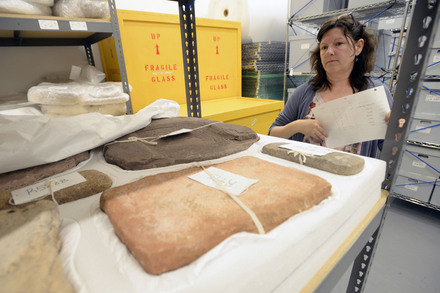
These grinding stones had been used by some to line their driveways
These grinding stones had been used by some defendants to line their driveways

The Salt Lake Tribune follows up on the status of the objects seized during the four-corners antiquities operation. The Federal government seized some 6,000 allegedly-looted antiquities, but has no clear victim or community to return them to in most cases.

The Salt Lake Tribune has video of a curator for the Bureau of Land Management supervising the warehouse where these objects are located. She shows the corn grinding stones which were removed from their context and had been used by some of the defendants to line their driveways.

Changing the attitudes in these communities is a crucial step to reducing the looting. And Federal officials are primarily seizing the material, without it seems the benefit of any broader education initiatives or criminal sanctions:

In Blanding and surrounding counties, residents once openly gathered artifacts and such collecting was considered a legitimate family activity. The laws changed in the 1970s, criminalizing the removal of artifacts from tribal and federal land.

But looting persisted, to the dismay of archaeologists and American Indians. Graves were a favorite target because they tend to yield intact objects buried with the dead.

The point of the “Operation Cerberus” investigation was not to jail looters, BLM officials said, but to rein in the illegal antiquities trade.

“You can’t put [an artifact] back, but it is forever out of the black market. This effort was to start unraveling it where it started,” said Smith, an archaeologist who served as BLM’s Canyon Country district manager at the time of the 2009 raids.

Will simply securing objects, without seeking to prosecute and jail individuals be an effective criminal response? It remains to be seen, but indications from the communities themselves seems to suggest that the local communities have not embraced the Federal government’s position.

Brian Maffly, A trove of looted artifacts, five years after BLM raids in Utah, Salt Lake Tribune Jun 29, 2014.

On chasing the looting/terror connection

CNN image of the destruction of the Buddha at Bamiyan in 2001

There has been a renewed series of reports in recent weeks connecting the looting of antiquities to terrorism. This recent Guardian article quotes an unnamed intelligence official stating that ISIS (Islamic State in Iraq and the Levant) has partially funded its activities through looting antiquities from ancient sites, though it surely gained far more by commandeering oilfields. Also this piece by Heather Pringle for National Geographic does a good job profiling the work of the Trafficking Culture group at the University of Glasgow, but it cannot resist the big headline. The Nat. Geo. piece makes mention of some of the tenuous connections between insurgents, terrorists, and antiquities looters. I’m uncomfortable calling every insurgent a terrorist, and the connections which are made point to antiquities looting as being a very minor, if inconsequential aspect of the activities of these groups. Matthew Bogdanos, the Marine and prosecutor, has also publicly stated that terrorists loot as well though I’m not aware of specifics he can point to.

The root for these connections may be this 2005 Der Spiegel article which again cites an unnamed investigator, this time a member of Germany’s BKA, as claiming that Mohammed Atta may have tried to use looted antiquities to finance the 9/11 terrorist attacks. This report, which contains little concrete information has had a longer shelf-life than it deserves, and has been used by a number of less-rigorous researchers, notably this piece authored by Noah Charney and two others which appears on the FBI website and breathlessly exclaims “[f]undamentalist terrorist groups rely on looted antiquities as a major funding source”. The data simply is not there to make this kind of connection, no matter how many clicks, headlines, or book sales it might generate. And making the connection is unhelpful.

What’s the harm in connecting antiquities looting to the activities of terrorists, ISIS, and other unsavory groups? For one, it diminishes the importance of antiquities looting as an issue. These reporters and some in law enforcement make the claim because many politicians and officials who make decisions about prosecutions and allocation of resources do not make policing antiquities a priority. As many have pointed out, too many law enforcement agencies still treat art theft and looting of sites as a property crime. The efforts to connect antiquities looting to terrorism then is a way to bootstrap this issue on to other crimes which receive more attention. Chasing the looting/terror connection means that some heritage advocates can even attempt to lump collectors and museums into funding terror. This is an unfortunate trend, and one which I think does the heritage community a disservice and lessens the level of intelligent discourse. Imagine a terrorist network is apprehended and we know it received funding by looting sites. If the network is “dismantled” by prosecution or drone strike, the site is still there, still unprotected, and still not a priority.

I suspect many terrorist and insurgent groups probably do engage in antiquities looting to some extent. But they engage in lots of other more lucrative criminal activity too. Just because hijackers may have visited strip clubs, played video games, or taken flying lessons does not make those activities “terrorism”. They are correlations without meaningful connections. Terrorists are the worst kind of criminal, and should be pursued and prosecuted as such. Likewise, archaeological looting is a serious and tragic crime which robs us of our collective cultural heritage. To attempt to make cheap connections between looting and terrorism undermines the cause and seriousness of the theft and looting. There are far more direct links between armed conflict and the looting and destruction of sites, we should perhaps focus our energy there. If we want our politicians and law enforcement agencies to take heritage crime seriously, we need to work harder to make them pay attention with real facts, losses, and data and avoid chasing tenuous links which are dramatic but have little chance of producing sound long-term cultural policy. The links may exist, but those interested in preserving antiquities should dial back linking the looting of sites with terrorism.


Mackenzie and Davis on Looting in Cambodia

Feet of a looted statue, Koh Ker Cambodia

Simon Mackenzie and Tess Davis have put together an important new empirical study examining a trafficking network in Cambodia in an article appearing in the British Journal of Criminology. From the abstract:

Qualitative empirical studies of the illicit antiquities trade have tended to focus either on the supply end, through interviews with looters, or on the demand end, through interviews with dealers, museums and collectors. Trafficking of artefacts across borders from source to market has until now been something of an evidential black hole. Here, we present the first empirical study of a statue trafficking network, using oral history interviews conducted during ethnographic criminology fieldwork in Cambodia and Thailand. The data begin to answer many of the pressing but unresolved questions in academic studies of this particular criminal market, such as whether organized crime is involved in antiquities looting and trafficking (yes), whether the traffic in looted artefacts overlaps with the insertion of fakes into the market (yes) and how many stages there are between looting at source and the placing of objects for public sale in internationally respected venues (surprisingly few).

Highly Recommended!

Cold War era images reveal 10k new sites in Middle East

A new project announced in Austin a few weeks back uses declassified satellite images has revealed as many as 10,000 new archaeological sites in the Middle East:

[T]he new Corona Atlas of the Middle East, unveiled Thursday at the Society for American Archaeology’s annual meeting, moves spy-satellite science to a new level. Surveying land from Egypt to Iran—and encompassing the Fertile Crescent, the renowned cradle of civilization and location of some of humanity’s earliest cities—the atlas reveals numerous sites that had been lost to history.

“Some of these sites are gigantic, and they were completely unknown,” says atlas-team archaeologist Jesse Casana of the University of Arkansas, who presented the results. “We can see all kinds of things—ancient roads and canals. The images provide a very comprehensive picture.”

The team had started with a list of roughly 4,500 known archaeological sites across the Middle East, says Casana. The spy-satellite images revealed another 10,000 that had previously been unknown.

The largest sites, in Syria and Turkey, are most likely Bronze Age cities, he says, and include ruined walls and citadels. Two of them cover more than 123 acres (50 hectares). (See also: “Drought Led to the Collapse of Civilizations.“)

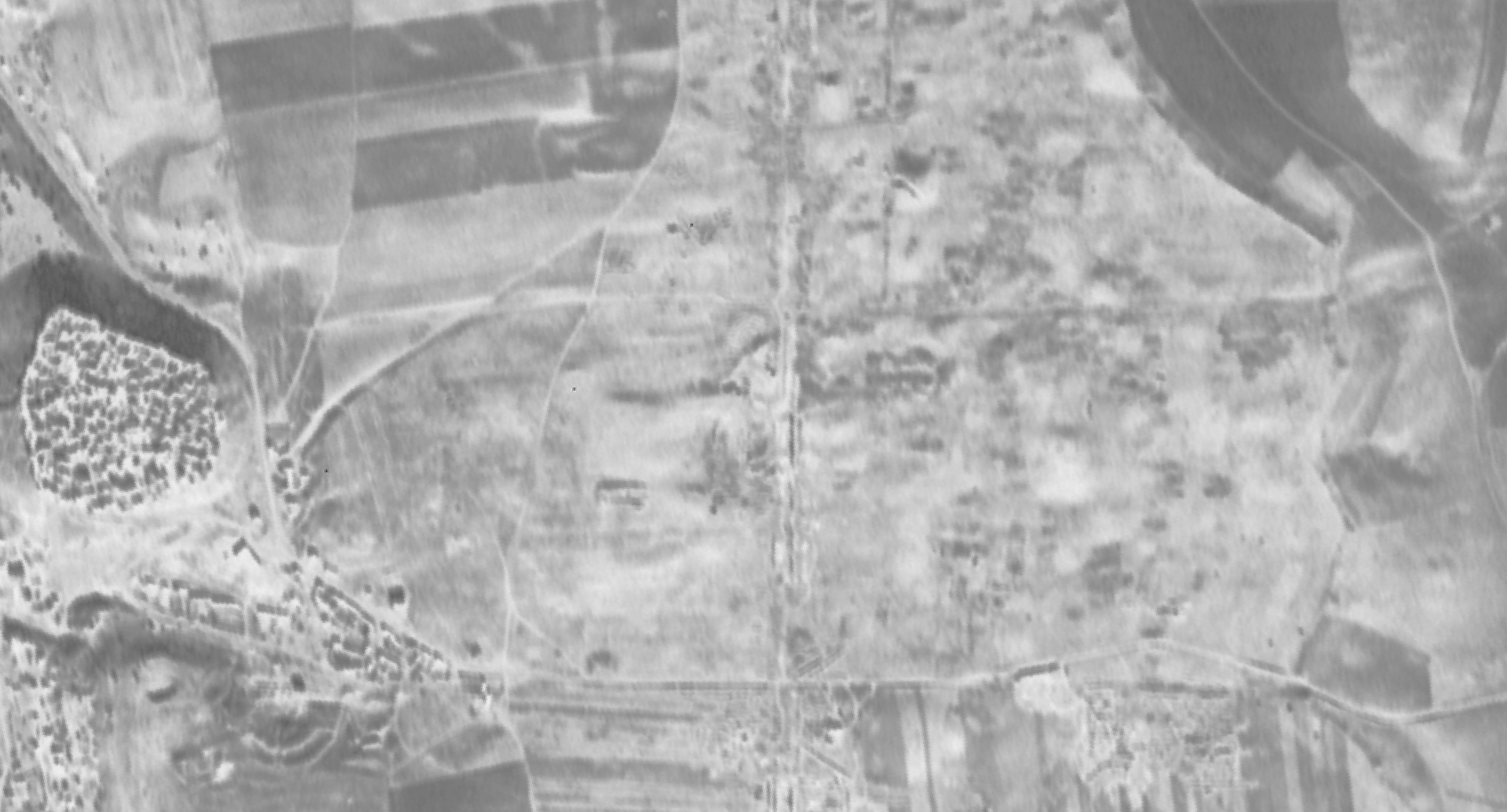
This sounds like a wonderful use of technology, offering some extremely useful comparisons with respect to climate change, migration patterns, etc. But for the illicit heritage trade, this offers a mixed set of challenges and opportunities. Looters have another tool (if they needed one) to find sites. But it also allows an opportunity for nations to harden these sites. The comparison of Apamea today to the satellite image of the same site in the late 1960’s is troubling:

Google image of Apamea


export

The level of detail in the newer image is stark, but there don’t appear to be the mass-looting pockmarks. What do you all think, does increased technology assist hardening of these sites, or provide a map for looters?

Updating the forfeiture of the Fano Athlete

Bronze Statue of a Victorious youth, at the Getty Villa

Mike Boehm of the L.A. Times reports on the current status of the Fano Athlete/Getty Bronze dispute. A division of Italy’s High Court (Corta Suprema di Cassazione) is expected to weigh an appeal of an earlier forfeiture order this week. I’m quoted as the lone dissenting voice arguing the Bronze should be returned to Italy. I think a return is the just thing to do when you consider the violations of Italian patrimony laws which occurred when the Bronze was smuggled ashore, hidden in violation of Italian law, and then allegedly treated very badly before being smuggled to Brazil, then conserved in Europe before the Getty acquisition.

For a full discussion of my understanding of the history of the case and the reasons why I think Italy stands a good chance of having the Bronze returned soon, you can have a look at my forthcoming piece in volume 32 of the Cardozo Arts and Entertainment Law Journal.

Both Stephen Urice and Patty Gerstenblith seem to see the case differently:

“I’m baffled by this,” said Stephen Urice, a professor at the University of Miami School of Law who’s an expert on art law and cultural property law. “Even if you apply our ethical norms today, I don’t see a problem.”

Patty Gerstenblith, a leading advocate of protecting archaeological sites and sending looted art back to nations of origin, said that “Victorious Youth” shouldn’t be considered a looted work and needn’t be returned. Italy never had a legally valid ownership claim, she said, because the statue wasn’t found in Italian waters or on Italian soil, and it wasn’t made or owned by modern Italy’s Roman and Etruscan forebears.

Gerstenblith, a professor at DePaul University in Chicago and director of its Center for Art, Museum and Cultural Heritage Law, said the fishermen who netted the statue did break Italian laws by hiding their find instead of reporting it to authorities. So did the original buyers who shipped “Victorious Youth” out of Italy without a proper export permit.

Although those illegalities raise ethical questions that might make a museum in 2014 steer clear of a purchase, Gerstenblith said, they have no bearing on the fishermen’s right to have owned and sold the bronze statue, or the Getty’s right to keep what it bought.

In any case, the forfeiture effort is persistent, and the Italian authorities seem inclined to use every tool at their disposal to help secure a return, including cultural diplomacy, mutual assistance treaties, and domestic Italian court proceedings.
Mike Boehm, The Getty’s “Victorious Youth” is subject of a custody fight, latimes.com (May 7, 2014), http://www.latimes.com/entertainment/arts/la-et-cm-getty-bronze-20140507-story.html.
Derek Fincham, Transnational Forfeiture of the “Getty” Bronze, 32 Cardozo Arts and Entertainment Law Journal (2014).