The Third Annual ARCA Conference Last Weekend

Neil Brodie, accepting his ARCA award 

This past weekend ARCA held its annual conference just off the medieval cloister here in Amelia, Italy. As part of the conference ARCA presents its awards to those whose research or work has made a contribution to the field of art and heritage protection. These are nominated by and voted on by ARCA’s Trustees and past award winners.

Two of our award winners were able to make it in person this year. Neil Brodie received an award for his scholarship. Neil joined ARCA for the first six weeks of the summer as a writer in residence, offering lectures to students and working on his next piece. But the highlight of the conference for me might have been the standing ovation the students gave him when he won his award. Neil has of course written extensively on the looting of antiquities and their eventual sale. He has conducted archaeological fieldwork and was the former director of the Illicit Antiquities Research Centre at the University of Cambridge. His terrific writing on the illicit trade in antiquities stands as a thoughtful and passionate cry for the preservation of a vanishing and finite resource.

Paolo Ferri

Paolo Ferri was also presented an award for policing and recovery. Dr. Ferri has been a prominent figure in the return of many looted antiquities from North American public and private collections. He now serves as an expert in international relations and recovery of works of art for the Italian Culture Ministry. This was Ferri’s first award for all of his work. The man who played such a large role in the return of so many beautiful antiquities to Italy had a quiet and direct manner and throughout the weekend was quick with a smile. He offered some interesting suggestions for future policy, including an International Art Court, but what struck me more than anything was his almost polite insistence for obeying legal and ethical principles. 


The other award winners who were unable to attend were Lord Colin Renfrew, and Prof. John Henry Merryman. 

Lord Renfrew has been a tireless voice in the struggle for the prevention of looting of archaeological sites, and one of the most influential archaeologists in recent decades. At Cambridge he was formerly Disney Professor of Archaeology and Director of the McDonald Institute for Archaeological Research and a Senior Fellow of the McDonald Institute for Archaeological Research. Prof. Merryman is a renowned expert on art and cultural property law who has written beautifully about art and heritage for many years. He currently serves as an Emeritus Professor at Stanford Law School. He adds this award to his impressive list of awards, including the Order of Merit of the Italian Republic and honorary doctorates from Aix-en Provence, Rome (Tor Vergata), and Trieste. His textbook Law, Ethics, and the Visual Arts, first published in 1979 with Albert Elsen, stands as the leading art law text. His writings have shaped the way we think about art and cultural disputes, and have added clarity and rigor to a field he helped pioneer.

Joni on the left, during a break  on Saturday

It was a terrific conference thanks in large part to Joni’s terrific planning, and I hope she’ll forgive me for dragging her into this undertaking. Thanks as well go to the ARCA staff who worked very hard to make things run smoothly, all of the presenters, students and attendees. These folks made for a super weekend.


Many of these issues can quickly get contentious, but the weekend allowed for plenty of opportunities for discussion, polite disagreement, and conversation. Next year’s conference will likely be a few weeks earlier, in June, and I’m very much looking forward to it.


For those who are interested, the schedule of presentations is posted below the jump:


Friday, July 8th

7:00 pm Welcome Event: Cocktails at Palazzo Farratini

Saturday, July 9th (Sala Boccarrini)

8:00 am – Conference Registration
8:30 am – Opening Remarks

9:00 am – 10:30 am Harmonising Police Cooperation and Returns
9:00 am – 9:20 am Arthur Tompkins, “Paying a Ransom: The Theft of 96 Rare Medals and the Reward Payments”
9:20 am – 9:40 am Ludo Block, “European Police Cooperation on Art Crime”
9:40 am – 10:00 am Saskia Hufnagel, “Harmonising Police Cooperation in the Field of Art Crime in Australia and the European Union”
10:00 am – 10:20 am Panel Discussion and Questions from the Audience

10:20 am – 10:40 am Coffee Break

10:40 am – 12:00 pm Perspectives on Forgery and the Local Impact of Heritage Crime
10:40 am – 11:00 am Laurie Rush, “Art Crime; Effects of a Global Issue at the Community Level”
11:00 am – 11:20 am Duncan Chappell, “Forgery of Australian Aboriginal Art”
11:40 am – 12:00 pm Panel Discussion and Questions from the Audience

12:00 pm – 1:00 pm Lunch Break and Snacks in the Cloister

1:00 pm – 2:40 pm Historical Perspectives on Looting and Recovery
1:00 pm – 1:20 pm Maria Elena Versari, “Iconoclasm by (Legal) Proxy: Restoration, Legislation and the Ideological Decay of Fascist Ruins”
1:20 pm – 1:40 pm Annika Kuhn, “The Looting of Cultural Property: A View from Classical Antiquity”
1:40 pm – 2:00 pm Elena Franchi, “Under the Protection of the Holy See: The Florentine Works of Art and Their Moving to Alto Adige in 1944”
2:00 pm – 2:20 pm Charlotte Woodhead, “Assessing the Moral Strength of Holocaust Art Restitution Claims”
2:20 pm – 2:40 pm Panel Discussion and Questions from the Audience

2:40 pm – 3:00 pm Coffee Break

3:00 pm – 4:30 pm ARCA Annual Awards
Neil Brodie
Paolo Ferri
Awards in absentia to Lord Colin Renfrew and John Henry Merryman

4:30 pm – 6:30 Writers of Art Crime
4:30 pm – 5:00 pm Vernon Silver
5:00 pm – 5:30 pm Fabio Isman
5:30 pm – 6:00 pm Peter Watson
6:00 pm – 6:30 pm Panel Discussion and Questions from the Audience

8:00 pm Gala Dinner at Locanda

Sunday, July 10th

8:30 am – 10:10 am Fresh Perspectives on Art and Heritage Crime
8:30 am – 8:50 am Leila Amineddoleh, “The Pillaging of the Abandoned Spanish Countryside”
8:50 am – 9:10 am Courtney McWhorter, “Perception of Forgery According to the Role of Art”
9:10 am – 9:30 am Michelle D’Ippolito, “Discrepancies in Data: The Role of Museums in Recovering Stolen Works of Art”
9:30 am – 9:50 am Sarah Zimmer, “The Investigation of Object TH 1988.18: Rembrandt’s 100 Guilder Print”
9:50 am – 10:10 am Panel Discussions and Questions from the Audience

10:10 am – 10:30 am Coffee Break

10:30 am – 11:30 am Cultural Heritage and Armed Conflict
10:30 pm – 10:50 pm Mark Durney
10:50 pm – 11:10 pm Larry Rothfield
11:10 pm – 11:30 pm Katharyn Hanson
11:30 pm – 11:50 pm Panel Discussion and Questions from the Audience

11:50 am – 12:10 pm Coffee Break

12:10 pm – 1:30 pm 40-year Anniversary of the 1970 UNESCO Panel
12:10 pm – 12:30 pm Catherine Sezgin
12:30 pm – 1 pm Chris Marinello
1:00 pm – 1:20 pm Panel Discussion and Questions from the Audience

1:30 pm End of the Conference

Presenters who were unable to attend:

Richard Altman, “Christie’s Failure to Accurately Attribute a Leonardo da Vinci Painting in 1997”
Ruth Redmond-Cooper, “Limitation of Actions to Recover Cultural Objects”
Norman Palmer 2009 ARCA Award Recipient
Phyllis Callina, “Historic Forgeries”

Questions or Comments? Email me at derek.fincham@gmail.com

Looting with Dynamite in Greece

This is the first I’ve head of using dynamite like this to loot sites: six looters in northern Greece have been arrested for using dynamite at an archaeological site to search for gold:

Authorities said Thursday that the four Greek and two Albanian men were arrested Wednesday after police discovered a 12-meter (40-foot) tunnel blasted into the side of a mountain near the city of Kavala, 700 kilometres (435 miles) north of Athens. 
The tunnel, with support columns and a construction track, was first started in 2008, according to local police, who said the suspects would be charged with illegal excavation, illegal use and possession of explosives, and violating archaeological protection laws. 
Archaeological services would not comment on whether they believed there was buried gold in the area.
Questions or Comments? Email me at derek.fincham@gmail.com

Looting and Criminal Sentencing in the Four Corners

The Butler Wash Ruins near Blanding, UT

More and more of the Four Corners antiquities cases are entering the sentencing phase, and I want to highlight two profoundly different reactions.

First, Kimberly Alderman (an Assistant Clinical Professor at the University of Wisconsin Law School) argues:

It’s readily apparent that federal prosecutors overcharged the cases in an attempt to justify the immense resources that went into the investigation. One has to wonder if that contributed to the suicide death of Dr. James Redd, who in his medical practice served less advantaged communities in Utah. . . . Illicit excavation is only one misuse of “sacred artifacts.” Another is to use them to justify a witchhunt that serves only government propaganda.

Taking a very different view, Cindy Ho of SAFE argues instead that:

Receiving probation of three- and two- years and a fine of $2,000 and $300 respectively, Jeanne and Jericca Redd joined a number of other defendants who receive a mere slap on the wrist for their contribution to the destruction of cultural heritage and human remains.

In response, SAFE sent a letter (see full text below) to Judge Waddoups expressing our disappointment that the sentencing guidelines were not appropriately followed. Most importantly, that “the leniency shown to the Redds sends the message that such laws are unimportant or do not apply to the Four Corners region, and will encourage rather than deter looters.” We did not receive a response from the Judge.

Stronger sentencing and custodial prison terms are poor measures for how seriously judges and the legal system take the looting of ancient sites. And placing the blame squarely on the shoulders of the sentencing Judge here misses the point I think. If you are really upset at the sentences (and I’m not sure you should be) blame should also be placed on the Federal Prosecutors. An axiom of criminal law every law student learns very early is that when defendants plead guilty, they will always receive a decreased sentence. Circumstances such as the personal circumstances of a defendant, their contriteness, and the violent or serious nature of the crime are also considered. One would be hard pressed to imagine a more sympathetic pair of defendants—a Mother and Daughter whose Father and Husband had committed suicide in the wake of the indictment. The U.S. Attorney’s in this case pursued a strategy of seeking guilty pleas for many of the defendants, particularly as their witness (and two of the defendants) committed suicide.

These sentences are about the best that could be hoped for. These are not the first prosecutions in the area, but unquestionably these are exceedingly difficult crimes to prosecute and investigate for two reasons. First, the sites are remote and catching the looters in the criminal acts will always be a difficult and expensive proposition. Second, there is noting about the antiquities market which encourages giving the history of objects. Without a consistent way to adequately differentiate licit from illicit objects, the black market will continue to be profitable. Archaeologists and heritage advocates need to ask themselves a hard question: is prohibition working? We can point fingers at collectors and dealers, but this ‘superindictment‘ in the Four Corners region is what enforcement will look like for the foreseeable future.

Questions or Comments? Email me at derek.fincham@gmail.com

Armed Attack on Antiquities Storehouse in Egypt

After the resignation of Zahi Hawass, there are reports of looting and theft including one disturbing report from Kafr el-Sheikh on Saturday:

Forty armed men attacked an antiquities warehouse in the northern Egyptian city of Kafr el-Sheikh on Saturday, shooting at warehouse security men and injuring several, state news agency MENA said. The attack is the second attempt to rob Kafr el-Sheikh’s Tal al-Faraeen (Hill of the Pharaohs) antiquities warehouse since Jan. 25, the first day of the nationwide protests that toppled President Hosni Mubarak on Feb. 11.

The warehouse doors were destroyed as were display cases, MENA cited the Head of the Central Department of Lower Egyptian Antiquities Mohamed Abdel Maksoud as saying. Some of the attackers had been caught, while others had escaped, he said.

In a statement on his blog yesterday, Hawass confirmed these reports.

So what concrete steps can be taken now? Chris Marinello and the Art Loss Register have pledged their support, but their efforts require the authorities in Egypt to notify them of the specific objects which have been taken. Larry Rothfield argues that while public statements are a necessary step, they have no real effect. He argues institutions should call on their members to help identify and reclaim missing objects, and to pool resources to hire locals and security personnel to protect storehouses and sites. He also suggest financial and logistical support could be provided by the United States to help Egyptians secure and guard their sites.

  1. Forty armed men attack Egypt antiquities store-MENA, Reuters, March 5, 2011, http://af.reuters.com/article/egyptNews/idAFLDE7240E820110305 (last visited Mar 7, 2011).
Questions or Comments? Email me at derek.fincham@gmail.com

Firsthand Report of Looting in Saqqara

The step pyramid of Djoser at Saqqara

There are a number of conflicting reports emerging from Egypt, and as evacuated members of foreign archaeological missions arrive home, we are learning more about what took place in the chaos last weekend. Zahi Hawass is reporting on his website that sites are being protected and that reports of rumors of looting at places like Saqqara are not true. Yet Lee Rosenbaum has been forwarded a firsthand account from a French archaeologists that describes looting last weekend:

The French Archaeological Mission at Saqqara has just left Egypt yesterday and arrived safe today. As most of you are in lack of direct information concerning what happened there, I will try to tell you in brief what I saw. 
On Saturday, the taftish [on-site officer from Egypt’s Supreme Council of Antiquities] asked us to stop the work, because the police were not in the capacity of protecting us anymore. In the afternoon, we could see that the police at the police station at the entrance of the resthouses was gone and had left us alone. That is when it all began: Robbers from Saqqara and Abusir became aware of this and they began to spread in the gebel [mountainous desert].
The first afternoon and night, they mainly attacked places which were secured with locks. They broke them and went inside. Most of the time, they destroyed what they saw and not robbed anything, trying to find “treasures.” These are not well organised robbers but, mainly, young people from 10 to 20, very probably looking for gold. That is why, when they saw blocks of stone, they most of the time left them, or destroyed them in order to find what was underneath.
I could see them with my eyes the day after, when we made a tour in the gebel with the army. Around 5 p.m., when the sun was still not down, at the muslim cemetery of Abusir, I counted more than 200 young men, excavating in front of us, ready to flee if the army would come down. A tank of the army was there, but they kept on digging. The soldiers were not numerous enough to do anything else than showing they were here. And when we went back, they probably came back in the highs. They were laughing and throwing stones at us. 
. . .

After three days, more and more soldiers arrived in Saqqara and secured more and more of the area. The worse days were Saturday and Sunday. It looks like the army is now securing most of the area, and they made clear that anyone taken would be taken to jail. Hope it works.

Questions or Comments? Email me at derek.fincham@gmail.com

Looted Statute (maybe Caligula) Seized Near Rome

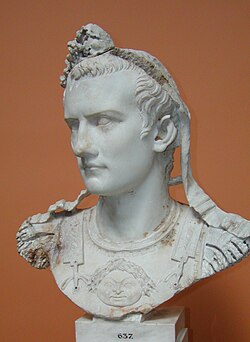
A Bust of Caligula at the Ny Carlsberg Glyptotek

Italian police have arrested a tombarolo with an 8-foot ancient statue not far from Rome. The statue may be worth €1 million. They believe the statue may be of Caligula, and may even have been looted from Caligula’s tomb, which has not been discovered. We surely won’t know if this tomb or the site was the actual tomb, but if looting is destroying the archaeological record, we are losing information.

Might the record have given us information on Caligula, who may have received a bad rap from the sources which have survived antiquity? Contemporaries describe the emperor as insane, saying he appointed a horse as consul, slept with his sisters, and killed often. But these might have been claims made by his political enemies in the senate and elsewhere—perhaps not too different from today’s politics. After all, how could the son of Germanicus (my favorite Roman) have been such a bad guy. Caligula only ruled from AD 37-41, before he was assassinated.

I wonder where this statue was going to be sold? The United States, the middle-East, Asia? Excavations will start to reveal the archaeology of the site where the tomb raider unearthed the massive statue.

  1. Tom Kington, Caligula’s tomb found after police arrest man trying to smuggle statue, The Guardian, January 17, 2011, http://www.guardian.co.uk/world/2011/jan/17/caligula-tomb-found-police-statue (last visited Jan 18, 2011).
Questions or Comments? Email me at derek.fincham@gmail.com

An Interview with Paolo Giorgio Ferri

Fabio Isman had a terrific interview with Italian Prosecutor Paolo Giorgio Ferri which I’ve just now gotten around to reading. Ferri was the prosecutor during Marion True’s trial in Italy. The discussion ranged from the problem of prosecuting antiquities looting to the international laws which apply, and the damage done by metal detecting. Here is an excerpt:

GDA: What was your first investigation into illegal excavations?

PGF: It was in 1994, with the then sergeant of the carabinieri department for cultural heritage, Vito Barra, now in charge of security at the Vatican Museums. We believed that a statue stolen at Villa Torlonia had been put up for auction at Sotheby’s. So we travelled to London [but made no progress]. Five months later, Sotheby’s sent me the names of two companies: Edition Services and Xoilan Trading. Edition Services is a company owned by Giacomo Medici, until now the only important “art robber” to have been convicted in Italy [Medici is currently appealing]. Xoilan Trading is one of the various names of [companies connected to] the art dealer Robin Symes. But at the time we didn’t know this. Faced with two Panamanian companies, Barra was on the verge of giving up. “No one’s going to tell us anything,” he said. Shortly afterwards, I met Daniela Rizzo, an archaeologist of the monuments office for southern Etruria. Together with Maurizio Pellegrini, from the museum of Villa Giulia, she was to play a crucial role in my work. 

  1. Fabio Isman, “Clandestine excavation is a crime that is hard to prove”, The Art Newspaper, January, 2011, http://www.theartnewspaper.com/articles/%E2%80%9CClandestine+excavation+is+a+crime+that+is+hard+to+prove%E2%80%9D/22164 (last visited Jan 18, 2011).
Questions or Comments? Email me at derek.fincham@gmail.com
Are Iraq’s Antiquities in a Revolving Door?

A 4,400 year old statue of King Entemena looted and now returned

In a ceremony today 542 works of art and objects were returned from the United States to Iraq.  Among the items returned were:

[A] 4,400-year-old statue of King Entemena of Lagash looted from the National Museum . . . an even older pair of gold earrings from Nimrud stolen in the 1990’s and seized before being auctioned at Christie’s in New York last December; and 362 cuneiform clay tablets that had been smuggled out of Iraq before the invasion . . .  There was also a more recent relic: a chrome-plated AK-47 with a pearl grip and an engraving of Mr. Hussein, taken by an American solider as booty and displayed at Fort Lewis, in Washington.

Yet a senior Iraqi official admitted that 632 other pieces returned by U.S. forces have apparently gone missing.  They were supposed to have been shipped to the Iraqi Prime Minister’s office via a flight authorized by Gen. Petraeus, Steven Lee Myers reports for the NYT that antiquities returned to Iraq are in a “revolving door”. Iraq’s ambassador to the United States Samir Sumaidaie told reporters ““We asked the US military to move it to Iraq. When the pieces arrived in Iraq, they were delivered to the office of the prime minister and now we are trying to find them”.  Perhaps the attention paid to these newly returned artifact will help to recover the previous shipment.  

  1. Steven Lee Myers, Iraq’s Looted Treasures in a Revolving Door, The New York Times, September 7, 2010, http://www.nytimes.com/2010/09/08/world/middleeast/08iraq.html?_r=1&hp (last visited Sep 7, 2010).
  2. The Associated Press: Hundreds of looted artifacts returned to Iraq, http://www.google.com/hostednews/ap/article/ALeqM5hwK_CSpBxsNuVUEaDuOwmSSCiqGwD9I344LG2 (last visited Sep 7, 2010).
  3. Jane Arraf, 542 antiquities looted in Iraq war return home. Where are the rest?, Christian Science Monitor, , http://www.csmonitor.com/World/Middle-East/2010/0907/542-antiquities-looted-in-Iraq-war-return-home.-Where-are-the-rest (last visited Sep 7, 2010).

Video from the NYT after the jump.

Questions or Comments? Email me at derek.fincham@gmail.com

Using Google to Police Sites in Jordan (and elsewhere perhaps)

An Image of the MEGA database in action

Randy Kennedy has a fascinating piece in the NY Times detailing the Middle Eastern Geodatabase for Antiquities (MEGA), which uses google earth satellite images to catalog and crowdsource sites and the conditions which may be threatening them.  the Getty Conservation Institute with financial support from the World Monuments Fund has been building the system over the last for years.  Kennedy reports the project will “allow archaeologists and conservators there, for the first time, to gain access to decades’ worth of records about Jordan’s sites and to monitor the condition of those sites much more easily”. 

Lest the website be used by looters to find sites, the information is currently restricted to a select group of individuals.  This project was originally designed to be implemented in Iraq, however “the chaos and violence in Iraq ultimately prevented the Getty from being able to work with officials there to create what was originally planned to be a local database program, not one that utilized the Web.”  There are plans to implement the system in Iraq soon, and if this program works well in Jordan, and the middle east, this program could be implemented just about anywhere else in the world. 

  1. Randy Kennedy, Getty Institute Project in Jordan Helps Track Antiquities, The New York Times, August 24, 2010, http://www.nytimes.com/2010/08/25/arts/design/25getty.html?_r=1&emc=eta1 (last visited Aug 26, 2010).
Questions or Comments? Email me at derek.fincham@gmail.com

Ancient Underground Tomb Discovered in Looting Raid

AP Photo:  Turkish Culture Minister Ertugrul Gunay

 Authorities in Turkey have discovered an “important archaeological site” while searching for looted antiquities, reports the Associated Press.  The discovery was made near Milas, in western Turkey.  This sarcophagus may have contained artifacts, but they have disappeared, likely lost in the illicit trade.  The piece describes the tunnels:

[T]he suspects had dug two tunnels — 6 and 8 meters (yards) long, from the house and an adjacent barn, leading to the tomb that is buried some 10 meters (yards) deep.
They used sophisticated equipment to drill through the thick marble walls of the tomb and were working to remove the coffin from the underground chamber when they were detained, according to the Culture Ministry.
“I would have wished that this (archaeological find) had been discovered through our digs and not through digs conducted by a band of treasure hunters,” Anatolia quoted Gunay as saying.
“This is not an ordinary treasure hunt. It is very organized and it is obvious that they received economic and scientific help,” Gunay said, adding that Turkey also would investigate the suspects possible overseas links.

  1. Turkey Discovers Ancient Underground Tomb : NPR, , http://www.npr.org/templates/story/story.php?storyId=129174682 (last visited Aug 13, 2010).
Questions or Comments? Email me at derek.fincham@gmail.com