Thoughts on Teaching Antiquities Law in Italy

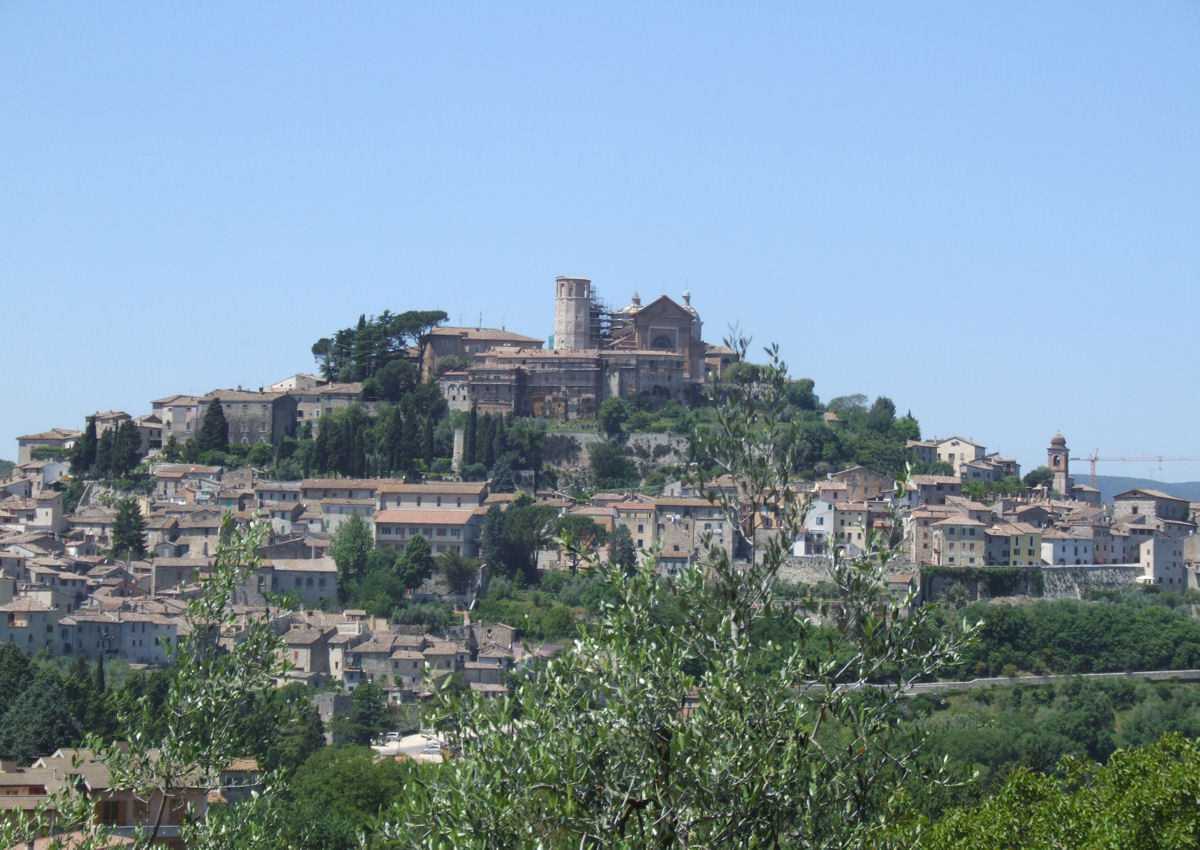
We have just returned home to New Orleans after a terrific couple of weeks in Amelia Italy where I was teaching a module on antiquities law for the first ARCA MA program this summer, and presenting at the ARCA Conference.  I’ll have more to say on the conference and Francesco Rutelli’s comments tomorrow.  Today I want to highlight the MA program itself, and what a treat it was to teach antiquities law in Italy. 

It was a terrific experience teaching in that setting, where heritage is often just outside your door.  We had a lot of fun, but I also came away impressed with the ARCA program and what the Director, Noah Charney and all of the students are trying to create.  The students were a great bunch, and will no doubt go on to do some exciting things in the heritage field.  We are at a point now where these laws and policies are increasingly complex and are playing more prominent roles in all fields from collections management, curatorship, archaeology, art history, conservation, and of course purchasing and selling of antiquities.  Consequently, I think it will be increasingly important for all of these field to incorporate some component of heritage education and crime prevention into their body of professional knowledge. 

Heritage issues and art crime are both under-examined I think; and the opportunities to study or even teach these important ideas are sadly far too rare.  That is changing I think, and one of the real treats I had in Italy were some of the exciting ideas and discussions which the ARCA MA students were able to generate.  One of the frustrating things about antiquities policy in particular is it often devolves into a set of entrenched arguments, and partisans on both sides often have difficulty acknowledging the gaps and flaws in their own reasoning.  Teaching a course was terrific for me because it exposed some of my own gaps, but also reaffirmed some things, and helped to crystallize my thinking. 

I think perhaps the best example of that may be this statute of Germanicus, located in Amelia’s Archaeological museum, and located right next door to the public library where we had classes.  This statue was found just outside the city walls in 1963, in pieces, where the Roman campus would have been.

One of the questions which we all write and think about when we discuss art and heritage is where do these objects belong, and this beautiful bronze was a great catalyst for that kind of discussion.  Amelia is not a particularly big town with a population of perhaps 15,000, and it doesn’t receive all that many tourists, because it doesn’t have a railway station and there are other sights to see in Umbria.  As a result, there may be some room to question whether Germanicus belongs in Amelia, as opposed to Peruggia, Rome, or even Paris or London or Malibu.  After all, not as many people can view the statue in Amelia; and the conservation techniques may not be as sophisticated as at the World’s leading arts institutions (apparently the conservators may have been a little too liberal with the green paint when they touched up the statue).

However all the ARCA students seemed to agree that there is no better place than Amelia for this Bronze.  And they weren’t a bunch of radical archaeologists, their backgrounds were pretty diverse.  The reason they agreed I think is that they had become connected to the daily rhythym of the city, they knew the butcher, the guys who run the wine bar, the bar where the locals hang out on Sundays, the restaurant owners, and they can see I think how important heritage and culture is to this city; and as a result, when we discussed the bronze, we asked a number of questions that I’m not sure you would have asked if you saw this bronze in Rome, or Paris, or London, or even Malibu. 

Germanicus was removed from this living and vibrant culture which clearly respects and values its traditions and heritage.  Where was the statue located?  Why was it located just outside this gate, the Porta Romana?  Why was it cut up and buried?  Why was Germanicus such a beloved figure?  As we learned from the staff at the Archaeological Museum, this Bronze was apparently cut up and buried later when Christianity gained influence in the Roman Empire and these bronzes and statues were being cut up or destroyed to make way for other images.  So you can see this remarkable bronze, just a few steps away from where it would have been on display hundreds of years ago. 

These are a very different set of questions than would have been asked if this statue was on display somewhere else, and I had a very different visceral reaction on seeing Germanicus then when I saw the “Bronze Statue of A Victorious Youth” at the Getty Villa for example.  So antiquities law and policy, which starts with the quesiton of where theese objects belong, and how they should be excavated; probably could not have been taught in a much better setting in my view.  Context was all around us, and it was a terrific open-air classroom. 

Questions or Comments? Email me at derek.fincham@gmail.com

Arkansas Couple Sentenced for Looting Federal Sites

An Arkansas couple has been sentenced in federal court for looting stone tools, arrowheads and other objects from sites near the Buffalo National River national park.  After a plea agreement, William Graves was sentenced to six months in federal prison, with one year of probation for a felony count of violating the Archaeological Resources Protection Act of 1979; his wife was sentenced to a year of probation for a misdemeanor violation.  They must also pay $4,613 in restitution.  Why does looting continue?  These are not particularly stiff penatlties, particularly when compared to other kinds of theft, and the monetary value placed on these objects is not really high, nor is there enough attention paid to the archaeological record which is distorted when these objects are removed. 

From the Springfield News-Leader:

The couple, William A. Graves and Misty Graves, were caught near the site in January, after park rangers were alerted to recent looting at a well-known archeological site in the upper district of the park, according to a news release from the National Park Service.

At the time of the arrest, William Graves was carrying digging tools and wearing boots that matched impressions found near the looting site, the park service said, while his wife was found with their vehicle at the trailhead in possession of several artifacts and a pick.

A search warrant at the Graves’ home turned up additional tools and evidence, the release said. After a six-month investigation, the Graves were indicted in federal court. William Graves, who subsequently admitted digging in the park, also turned in “71 stone tools, projectile points, or other artifacts” he said came from the site, authorities said.

Questions or Comments? Email me at derek.fincham@gmail.com

Medici Conviction Upheld

[medici_sarpedon.jpg]An Italian appeals court this week upheld the conviction of Italian art dealer/smuggler Giacomo Medici according to a report by Steve Scherer for Bloomberg.  Medici had been convicted of conspiracy to traffic in antiquities in 2004 and sentenced to a 10-year term.  It seems to be a very stiff sentence when compared to most art and antiquities crimes.  The Appeals court in Rome upheld the conviction and set the sentence at eight years, while upholding a 10 million-euro fine.  Italian Prosecutor Paolo Ferri told the LA Times that this was a “very hard sentence. This is the first time in Italy that this type of crime has been given such a high punishment.”

This is the most recent culmination of the 1995 raid on the Medici warehouse in Switzerland which uncovered objects, polaroids, and otherevidence which has resulted in a number of repatriations from museums all over the world, but particularly North American museums.  Here of course is Medici, triumphantly posed next to one of his most notorious objects, the Euphronios Krater, when it was on display at the Met in New York.

This now leaves Marion True, former curator of antiquities at the Getty, whose criminal prosecution is currently ongoing.  One question worth asking is, where are the other dealers, tombaroli, and museum staff?  Where were those able to elude prosecution, not just in Italy, but in the United States as well.

I’ll have much more on this, and Italy’s cultural policy next week in light of Francesco Rutelli’s comments at last Saturday’s ARCA conference in Amelia Italy, including his thoughts on what other objects need to be returned, why they were sent back, and his thoughts on objects which had been acquired by Robin Symes.

Questions or Comments? Email me at derek.fincham@gmail.com

Francesco Rutelli on the Euphronios Krater

File:Villa Giulia cortile 1040216-7.JPGThis Saturday I participated in the ARCA Conference on the study of art crime in Amelia Italy.  I’ll have a lot more to say about my time in Italy, ARCA, and the masters course generally in the coming days, but I wanted to share one of the highlights.

One of the speakers, and the recipient of one of the ARCA awards was Francesco Rutelli, former Culture Minister of Italy.  Following his short discussion there was time for a couple of questions, and I was able to ask about his thoughts on the current disposition and position of the Euphronios Krater, on display here at the Villa Giulia.  Michael Kimmelman had an interesting piece last week in the New York Times, arguing “Italy’s biggest prize in the war against looting antiquities went on view recently at the Villa Giulia in Rome” but that “Italians didn’t seem to care much”.  I found that to be pretty typical, as an American visiting Rome, itis not really easy to see how or it can be quite difficult to find where the Krater, or many of the other returned objects are currently on display, particularly in a city and country with so many beautiful objects and heritage sites, wich  which truly is an enormous open-air museum. 

I asked Rutelli about that, about how Italian’s don’t seem all that interested in the Krater and how not many people are visiting it.  He responded with what I thought was a pretty thoughtful answer.  He stated that the piece is in “the correct place” and that in “scientific terms it is correct”.  It is an Etruscan object, and the Villa Giulia is the Etruscan museum—arguing that if the piece had been properly and legally excavated from Cerveteri, this is where the piece would have been displayed.

He did acknowledge though, that there may have been problems with “publicity and information”, a problem he traces to the current government, which he argued “should do more”, and these repatriated objects should all be displayed together as part of a meaningful message. 

He had a lot of interesting things to say, and the presentation of the award, and the audience of ARCA Masters students, interested observers, and reporters gave him an opportunity to look back on the repatriations of the last few years; and of course he was the public face of much of the negotiations between Italy and many North American museums.  Though he did point out that it was not just North American institutions.  Repatriations were also reached with Japanese and other European institutions—a fact often overlooked.  I’ll have much more to say about his other comments, which included Robin Symes, and a kind of a response to James Cuno, in the next few days.

Questions or Comments? Email me at derek.fincham@gmail.com

NAGPRA complaint against UMass

Gale Courey Toensing for Indian Country Today reports on a NAGPRA complaint against the University of Masachusetts:

A complaint against the University of Massachusetts Amherst, claiming violations of the Native American Graves Protection and Repatriation Act is under investigation and will be heard at a Review Committee meeting in the fall.


The complaint was filed jointly by Tribal Historic Preservation Officers Cheryl Andrews-Maltais of the Wampanoag Tribe of Gay Head, Aquinnah; John Brown III of the Narragansett Indian Tribe; and Sherry White of the Stockbridge-Munsee Community Band of Mohican Indians in May 2008. Andrews-Maltais has since been elected chairwoman of her tribe. . . .


The complaint says that UMass Amherst has violated NAGPRA by failing to respond to the tribes’ request for repatriation of human remains from the Connecticut River Valley that are in its possession, and failing to consult with the tribes.


The joint complaint also says the university failed to publish a complete inventory of the human remains and other items of cultural patrimony in its possession, and claims the remains from the Connecticut River Valley listed in its partial inventory are “culturally unaffiliated” even while admitting that the three tribes had a historical presence in and historical ties to the area, and that they are the only federally recognized tribes with standing to claim the remains.

Questions or Comments? Email me at derek.fincham@gmail.com

More Thoughts on the Parthenon Marbles

“[T]he collection is a miracle”. So writes Michael Kimmelman on the opening of the New Acropolis Museum in the NY Times. He notes:


Ownership remains the main stumbling block. When Britain offered a three-month loan of the marbles to the Acropolis Museum last week on condition that Greece recognizes Britain’s ownership, Mr. Samaras swiftly countered that Britain could borrow any masterpiece it wished from Greece if it relinquished ownership of the Parthenon sculptures. But a loan was out.
Pity. Asked whether the two sides might ever negotiate a way to share the marbles, Mr. Samaras shook his head. “No Greek can sign up for that,” he said.
Elsewhere, museums have begun collaborating, pooling resources, bending old rules. The British Museum, the [Met], the Louvre and other great public collectors of antiquity have good reason to fear a slippery slope if the marbles ever do go back, never mind what the Greeks say.

Pity indeed. Lee Rosenbaum argues today that such a loan would be difficult, More daunting than logistics of shuttling this monumental work back and forth is the issue of trust: The British Museum would need ironclad assurances that once the marbles were in Athens, they would be allowed to leave when the time came for their long-term London sojourn. I keep envisioning Elgin Marble Riots, with distraught Greeks hurling themselves in the path of transport trucks.”  
However one comes down on this issue, it really is true I think that we are all the poorer for the inability of both the Greeks and the British Museum to work together, because somehow and in some form the sculptures should be viewed together, as one unified work of monumental art.

Here is David Gill’s terrific video post on the Parthenon Marbles dispute:


Questions or Comments? Email me at derek.fincham@gmail.com

Another Suicide in the Wake of the Federal Looting Investigation

Steven Shrader, one of the 24 individuals indicted for dealing in looted antiquities killed himself Thursday night. This comes after the suicide of another man in connection with the case. The sad news should increase the criticism by two Utah senators who have asked for a Congressional investigation into the tactics used by Federal Authorities.

The Salt Lake Tribune reports:


News of a second death in the antiquities crackdown surprised southeastern Utahns . . . . “That’s tragic — if it’s the result of his concerns over his case,” said Phil Mueller, a Blanding resident and Redd family friend. “I don’t know — I don’t know [Shrader]. But to hear the news is certainly very tragic.” Mueller added that he doesn’t accept federal authorities’ explanation that they needed a show of force in the raid because they believed most of the suspects could be armed. “You could walk up to any house in San Juan County,” he said, “and they’d probably have a gun.”of a second death in the antiquities crackdown surprised southeastern Utahns, although those contacted said they had not heard of Shrader.

These suicides are certainly tragic, and though some blame may be placed on the tactics used by federal agents, the simple truth is when you violate federal law, you are running the risk of arrest and prosecution. Digging up Native American remains is not an innocent activity one accidentally does it seems to me. And as more of the search-warrant affidavits are made public, there is more and more allegations of clear wrongdoing on the part of the indicted individuals. Patty Henetz for the SLT summarizes the recent affidavit released by federal court:
On a brisk morning last September, three men — including a federal undercover operative — carried shovels and rakes to an ancient Puebloan mound on public land in San Juan County. As they piled dirt onto a blue plastic tarp, out popped a skull.

The discovery, recorded in real time and detailed in recently released federal court papers, didn’t seem to slow the men much.

Richard Bourret picked up the skull and put it back in the hole, the documents say, then he, Vern Crites and the operative, whom federal authorities call the “Source,” folded the tarp and funneled the dirt back into the hole. There wasn’t quite enough to cover the damage.

Crites lamented a lost opportunity, saying he “wished that fella had still been intact, the skeleton, I mean.”

Questions or Comments? Email me at derek.fincham@gmail.com

Illicit Antiquities and Endangered Animals

The Daily Show With Jon Stewart Mon – Thurs 11p / 10c
Peter Laufer
thedailyshow.com
Daily Show
Full Episodes
Political Humor Jason Jones in Iran

I saw this interview of Peter Laufer yesterday, and it highlights the similarities between the illicit art and antiquities trade and the trade in endangered species.  Laufer here could just as easily be talking about many antiquities collectors, or as Jon Stewart calls them “supervillains”. 

Questions or Comments? Email me at derek.fincham@gmail.com

Gerstenblith on Schultz and Barakat

Patty Gerstenblith has posted a recent article, Schultz and Barakat:  Universal Recognition of National Ownership of Antiquities, which appeared in the recent issue of Art, Antiquity and Law, Vol. 14, No. 1, Apr. 2009.  She discusses the two recent cases in the United States and United Kingdom which lay out the requirements for how courts in these two nations view national ownership declarations of art and antiquities by other nations of origin.  Here is the abstract:

Two decisions, one in the United Kingdom and one in the United States, decided just about five years apart, are significant for universalising the principle that vesting laws – laws that vest ownership of antiquities in a nation – create ownership rights that are recognized even when such antiquities are removed from their country of discovery and are traded in foreign nations. This basic principle has proven to be very controversial in the United States and has been subjected to bitter criticism; yet virtually the same legal principle, when decided in a British court, received little comment or criticism. Compounding the interest of these two decisions is that, although both decisions came to virtually the identical conclusion, they did so utilizing different methods of analysis.

Although laws regulating cultural heritage have a long history, nations have enacted national ownership laws since the nineteenth century for the dual purposes of preventing unfettered export of antiquities and of protecting archaeological sites in which antiquities are buried. When ownership of an antiquity is vested in a nation, one who removes the antiquity without permission is a thief and the antiquities are stolen property. This enables both punishment of the looter and recovery of possession of the antiquities from subsequent purchasers. By making looted antiquities unmarketable, these laws reduce their economic value. National ownership laws thereby deter the initial theft and the looting of archaeological sites that causes destruction to the historical record and inhibits our ability to reconstruct and understand the human past. While reinforcing these goals, the Schultz and Barakat decisions also bring uniformity to the national treatment of this central legal principle.

Questions or Comments? Email me at derek.fincham@gmail.com