Arrests in the Fitzwilliam Theft

There are reports that between two and six individuals have been arrested in connection with the theft of 18 Chinese objects from the Fitzwilliam Museum in Cambridge. The theft was the subject of BBC’s Crimewatch Tuesday:

The stolen pieces had been given as gifts or bequests to the museum, with some experts estimating the artifacts to be worth approximately £18 million (about $28.7 million Cdn). None of the artifacts has been recovered. Police sought help from the public through a segment on the BBC-TV program Crimewatch on Tuesday evening. The show aired closed-circuit camera footage of four suspects sought in conjunction with the robbery.

As Dick Ellis explained in an interview last week, these thieves probably saw the booming trade in Chinese artworks, and may not have understood how difficult an eventual sale would be. Much in the same way similar objects were stolen from the Durham museum.

17th Century jade "imaginary beast" stolen from Fitzwilliam MuseumNoah Charney speculated last week that the stolen objects will be “smuggled [to China] . . . for in China the general rules about not purchasing art without performing Due Diligence and checking stolen art databases do not apply. Provenance is far less of an issue, sometimes for cultural reasons, but also for practical ones–Internet black-outs mean that many in China could not check stolen art databases, even if they were inclined to do so.” I’m not sure that will be the case.

The Chinese have—on paper at least—the most regulated art market in the world, with a tiered series of regulation. It is one of the only sets of regulations which puts direct regulation in the art market, at the point of sale. Are there problems and corruption? Perhaps. But what art market—whether its in Rome, Paris, London, or New York is not corrupt?

In 2002, the Standing Committee of the National People’s Congress passed the Law on the Protection of Cultural Relics. The 2002 Law legalizes private transactions involving cultural relics in five circumstances, (1) legal inheritance or gift; (2) purchase from cultural relics shops; (3) purchase from cultural relics auction enterprises; (4) exchanges or transfers between individual citizens; and (5) other methods authorized by the central government. Many of these transactions take place at officially sanctioned cultural relics shops and auction enterprises; and the 2002 Law prohibits a cultural relic shop from running an auction and vice versa.

Under Article 58, the government may buy any cultural relic submitted to a mandatory inspection before sale pursuant to Article 56. During this mandatory inspection, under Article 56, the government is given a kind of right of first refusal, with the purchase price determined by the government representative. Pursuant to article 57, in the event of a sale to a private individual, a report is produced, effectively tracking the buyers and sellers of cultural objects. This new regulatory framework seems a very aggressive strategy, and one that, if implemented effectively, could positively impact the illicit trade in China. However, implementing this strategy may be difficult and subject to corruption.  And yet by recording who buys what, it may be possible not only to track the chain of title of specific cultural objects, but also to evaluate whether individuals are routinely buying and selling stolen, looted, or suspicious objects. What other nation does this routinely? Perhaps the Italian Carabinieri, but that may be it.

Many in the West have an immediate reaction to all things China. And I think that quote above does not really convey the reality of the Chinese art market. Prof. Paul Bator remarked in 1983 that China was the great under-researched area of the world when it comes to sources of heritage theft (he called it art theft). Despite s few reports, that is still the case. We can blame the Chinese for other problems perhaps, but the Chinese art market does not I think bear the collective guilt for the Fitzwilliam theft. Rather it seems to be a more homegrown set of thieves from East London.

  1. He Shuzhong, Protection of China’s Cultural Heritage, 5 J. Art, Antiquity & L., 19 (2000).
  2. J. David Murphy, Plunder and preservation : cultural property law and practice in the People’s Republic of China, (1995), http://www.bcin.ca/Interface/openbcin.cgi?submit=submit&Chinkey=204154 (last visited May 2, 2012).
  3. Andrew Jacobs, China Hunts for Art Treasures in U.S. Museums, The New York Times, December 17, 2009, http://www.nytimes.com/2009/12/17/world/asia/17china.html?_r=2&hp (last visited Dec 17, 2009).
  4. Peter Foster, China to study British Museum for looted artefacts, Telegraph.co.uk, October 19, 2009, http://www.telegraph.co.uk/news/worldnews/asia/china/6374959/China-to-study-British-Museum-for-looted-artefacts.html (last visited Oct 20, 2009).
Questions or Comments? Email me at derek.fincham@gmail.com

Byrne on the role of preservation in urban development

Prof. Peter Byrne has posted Historic Preservation and its Cultured Despisers: Reflections on the Contemporary Role of Preservation Law in Urban Development on SSRN. The piece has a thoughtful discussion of historic preservation. He argues convincingly that the “cultural heritage conveyed by a community’s historic buildings is a public good, the value of which is not fully internalized in property rights . . . [r]egulation may be done well or poorly, but regulation must exist.” He puts Edward Glaeser’s breathless appreciation for Houston’s development policies in context, well worth a read.

Questions or Comments? Email me at derek.fincham@gmail.com

Footnotes

Questions or Comments? Email me at derek.fincham@gmail.com

Ellis on the Cambridge Theft

A jade vase and recumbent buffalo and horse
Some of the objects taken from the Fitzwilliam on April 13

Dick Ellis can always be relied on to provide a sensible commentary on a recent theft. Speaking to the Cambridge-news he argues it is unlikely that the thieves stole the objects to order. The 18 stolen objects were taken from the Fitzwilliam museum, and as always the trick is not the stealing, it is selling or profiting off the theft. Ellis notes to the BBC:

Almost certainly, in my opinion, the museum was targeted in the same way as we saw thieves target rhino horns when their price went through the roof. They have an appreciation that in the last couple of years the Chinese art market has now outstripped the United States and European art markets to become the premier art market in the world.The thought is that if you steal some quality items – and you will find quality items in museum collections – you can sell them on to a Chinese market that has an insatiable appetite for this sort of thing.

Questions or Comments? Email me at derek.fincham@gmail.com

Conference: "Cross-border movement of cultural goods" May 19, 2012 in Athens

The Hellenic Society for Law and Archaeology and the Institut fur Kunst und recht are putting together a conference at the Acropolis Museum in Athens in a few week on May 19th 2012. The conference aims:

  • to examine the need of reforming the existing legal framework on international, European and national level and to offer proposals to take a closer look at: 
  • the legal trends and the challenges they create for member states
  • the strengths and deficiencies of the two major international conventions as well as the regulations of European and national law  
  • to discuss the legal reforms currently underway in European Law 
  • to present and examine case studies from Greece, Switzerland, Germany, Austria 
  • to network and exchange ideas with leading professionals
It looks to be a promising event, and what a setting for a law and archaeology conference. I note with interest that there appears to be efforts to revisit the 1995 UNIDROIT and the 1970 UNESCO Conventions soon.

Questions or Comments? Email me at derek.fincham@gmail.com

Conference: The Social Construction of Illegality

banner_norms-margins_narrowThe Royal Museum for Central Africa (Tervuren), the  Free University Brussels and the University of Leuven are organizing an international conference in October titled “Norms in the Margins and Margins of the Norm: the Social Construction of Illegality” October 25-27 in Belgium.

The international conference Norms in the Margins and Margins of the Norm. The social Construction of Illegality aims at fostering a cross-disciplinary debate on everyday practice seen as systems of practical norms in realms more commonly considered from a legal or moral standpoint. Political scientists, jurists, historians, sociologists and social anthropologists will exchange their views on interactions between normative systems produced by official actors such as States or international organizations and those systems of norms informing the actions of actors thriving in the margins of official categories. Official categories emerge as highly political creations, while powerlessness in the margin reveals itself as relative. Market oriented economy intertwines with underground networks and these interconnections produce implicit norms that are also produced in the loopholes of law in various spheres of societies. These themes will be analysed through case studies bearing on traffics in art, drugs, organs, etc as well as on corruption, the cultural production of rules, etc.

Questions or Comments? Email me at derek.fincham@gmail.com

Support for the Jurisdictional Immunity Clarification Act

Rick St. Hilaire has a detailed discussion supporting S.2212:

The proposed bill clarifies the spirit of a federal law in force for over 35 years, but weakened in the last few years. Congress in 1965 passed IFSA (formally known as the Immunity from Seizure Under Judicial Process of Cultural Objects Imported for Temporary Exhibition or Display).  Lawmakers passed it because they wanted to promote the importation of art.  They wanted to let foreign art lenders know with certainty that their cultural works would not become entangled in litigation once on American soil.  


Questions or Comments? Email me at derek.fincham@gmail.com

Footnotes

Krak des Chevaliers, a crusader castle in Syria is at risk

Questions or Comments? Email me at derek.fincham@gmail.com

The Immunity from Seizure Act and the proposed clarification in the Senate

File:Suprematism 18th Construction.jpg
One of the Nazi-era works at issue in Malewicz, titled Suprematism 18th Construction, by Kazimir Malevich

Legislation which would have an impact on the lending of foreign artworks is currently moving through both the House and the Senate. The Foreign Cultural Exchange Jurisdictional Immunity Clarification Act would remedy an inconsistency between two laws. The first act, the Immunity from Seizure Act bars suits which infringe on the custody or control of a museum while they are loaning the work of art. The other act, the Foreign Sovereign Immunity Act has opened the door for some claims, even when immunity has been granted under the Immunity from Seizure Act. 


Two recent cases which highlight this are Magness v. Russian Federation, and Malewicz v. City of Amsterdam. In both those cases suits for the monetary value of the paintings were allowed to continue, despite the fact that they had been granted federal immunity. The proposed law seems to be a sound and reasonable accommodation for the recent conflict between these two statutes. However some have claimed that this would preclude certain claims in Federal Court. This strikes me as troubling because the State Department hears a request for immunity and the parties have to provide detailed information about the history of the loaned works. The implication is that the State Department is not thoroughly vetting these requests, and that when the works arrive in the United States unsuspecting lending museums, who may have been unaware they had a work of art subject to a claim, may be hauled into court, after they were given guarantees that this wouldn’t happen. A grant of immunity is issued by the State Department, which has the responsibility for checking that there is no potential claim to the work of art. I find it curious that many of the same groups expressing anxiety about the clarification (like the LCCHP here in this brief press release) advocate for State Department involvement in US import restrictions via the Cultural Property Advisory Panel. It seems to me that if we entrust the State Department with regulating imposition of import restrictions, why are they unable to research the history of an object entering the US for a temporary loan. And for me that makes bad law and bad policy. Foreign lenders perhaps should give up title to some of these contested objects, but claimants waiting in the wings and springing a lawsuit on a lending museum will lead to fewer art loans, and will end up limiting those temporary exhibitions anyway. What we have is a cultural embargo on works of art which may be the subject of a Nazi-era claim.


Art is a good ambassador, and the exchange of art is an admirable goal. Aggressive repatriation litigation, particularly after a foreign museum has been told it will not be sued in Federal Court, by the State Department, sets a troubling precedent and will certainly restrict number and quality of works of art museum visitors will see in loaned exhibitions. Remedying Holocaust-era wrongs is a worthy goal, but piercing immunity produces uncertainty for museums and current possessors of art. A better system would negotiate and recommend returns or compensation via something like the Spoliation Advisory Panel in the United Kingdom. Most interesting of all, the proposed clarification does not even attempt to remedy potential difficulties with Nazi-era disputes which arose between 1933-1945. Holocaust-era claims gained in number in the 1990’s with a number of important efforts and writers focusing attention on the issue. It is an example that many museum-goers are aware of. We all know the Nazi’s looted art and forced victims into selling or leaving behind their art collections. The legal precedents created in holocaust-era claims also can be applied to other periods of taking like the Bolshevik Revolution and the Cambodian conflict, and in fact we are seeing courts examine the taking of objects during those periods as well. The Holocaust repatriation movement has the benefit of a growing number of advocates who are actively networking with repatriation attorneys, auction houses, and art historians to aggressively pursue claims. However the cost of this litigation is restricted movement of art, and increasing silence on the part of museums in Europe and North America. Holocaust victims should have their rights vindicated, but a courtroom adversarial process is not always the best remedy for past injustices.

Questions or Comments? Email me at derek.fincham@gmail.com

Speaking out about fakes

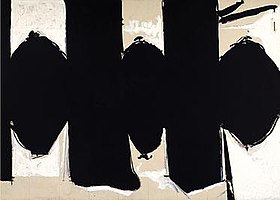
Elegy to the Spanish Republic No. 110, Robert Motherwell 1971 

Jack Flam, currently working on a catalogue raisonné of Robert Motherwell talks about the backwards incentives by members of the public and scholars when it comes to authenticating art. Highly recommended, it puts all the discussion of fakes and forgeries in the context of what experts and the market are not doing to prevent fakes from polluting the pool of art in private collections and in the public trust:

These market circumstances have unfortunately coincided with a situation in which scholars and foundations that make decisions about authenticity feel increasingly constrained by legal threats from people who own or are selling fakes. So while the number of fakes in the marketplace is dramatically increasing, an important means for assuring the veracity of artists’ works has been disappearing. Several scholars and foundations are ceasing to authenticate works because they are afraid of lawsuits, and such fears have even constrained the way scholars communicate with each other.
Back in 2008, after the Motherwell catalogue raisonné project suspected that a number of “Spanish Elegy” paintings were forgeries, I had ample occasion to observe how pressure can be effectively put on scholars who believe a painting is inauthentic in order to constrain them from saying so publicly. When I contacted scholars who were engaged in research on some of the other artists whose works were supposed to be in Rosales’s collection, many declined to discuss their opinions about those works; and the ones who did so usually insisted on speaking off the record.
It was not until injured parties came forward—that is, people who had spent significant amounts of money on works that did not pass the scrutiny of either connoisseurship or forensic testing—and the press picked up the story that scholars became (cautiously) more open about what they thought of those works.

  1. Jack Flam, Break the silence over fakes, The Art Newspaper, April 12, 2012, http://www.theartnewspaper.com/articles/Break-the-silence-over-fakes/26124 .
Questions or Comments? Email me at derek.fincham@gmail.com